
Privacy is a top priority for everyone in today's digital landscape. Whether you run a business or not, safeguarding your customers' privacy is crucial.
Understanding the Importance of a Privacy Policy
When you provide information on a website or service, you're agreeing to a privacy statement. This protects both the company gathering the data and the visitor providing it. To ensure safety and compliance, businesses must adhere to national and international standards by having a robust privacy policy in place.
Legal Compliance and Consequences
Not having a privacy policy can lead to hefty fines for violating data collection laws. By investing time and resources into creating a policy, you can avoid potential penalties and safeguard your company.
Key Takeaways from Attorney Aiden Durham
– A privacy policy is mandatory for collecting visitor information.
– Compliance is non-negotiable for both you and your customers.
– Privacy laws vary by state, so ensure your policy covers all bases.
The Role of a Privacy Policy in E-Commerce
Shift4Shop.com emphasizes that a comprehensive privacy policy is essential for e-commerce businesses to comply with regulations. It includes terms of service, user consent, and cookie policies to establish trust and credibility with visitors.
What Constitutes a Privacy Policy?
A privacy policy informs users about data collection, methods used, and the purpose of data collection. It also outlines how data may be shared with third parties and provides opt-out options for visitors.

Building Trust Through Transparency
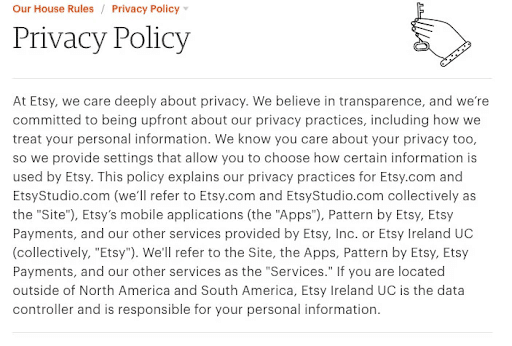
Being transparent about data practices, as demonstrated by Etsy's privacy policy summary, fosters trust and authenticity with visitors. Communicating that you prioritize their privacy can enhance brand loyalty.
Considerations When Drafting a Privacy Policy
While templates can guide you, hiring a lawyer with expertise in data protection laws can ensure compliance and mitigate risks of fines. Legal assistance is especially valuable for businesses dealing with varying laws across jurisdictions.
Placement of Privacy Policy
Depending on your data collection methods, the privacy policy should be easily accessible. For account-based data collection, place the policy on the account creation screen. For general data collection, display it prominently on your website.
Final Thoughts
Having a clear and comprehensive privacy policy is essential for businesses that collect data. By prioritizing transparency and seeking expert guidance, you can protect both your company and your customers. Consider seeking assistance from professionals like Marketing Insider Group to enhance your data privacy practices.
Frequently Asked Questions
Social Media Marketing allows you to promote your company online. It is an excellent tool to spread brand awareness and generate leads and sales. Here are five methods to leverage social media marketing to increase your business.
- A Facebook Fan Page allows you to interact with customers via Facebook. You can also upload content such as photos, videos, and other files.
- Twitter Promote Your Business – Twitter offers a great way to share information and connect people. You can increase your visibility with hashtags.
- Post Videos on YouTube. Many people enjoy watching these videos. If someone likes what they see, they may click to visit your website.
- Host live events – Live events allow potential clients to meet you face-to–face. They can ask you questions about your products or services.
- React to Customer Review – Positive reviews will build trust between you and your clients, which in turn will encourage repeat purchases. Respond quickly to any negative comments.
What is the difference between marketing and advertising?
Advertising is communication that promotes brands or products. Advertising is usually accompanied by a clear call for action, such “Buy Now!” You can also click here.
On the other hand, marketing is a way of communicating your company's mission, vision, and values to potential customers. Marketing can also help build relationships between current and potential customers.
For instance, if you sell shoes online, you may use marketing to tell your story about who you are and what you offer. You could talk about your history, philosophy, and commitment to quality. You could even share testimonials of satisfied customers. To encourage people to visit your site, you could also create an event that gives away shoes free of charge.
Marketing is all about telling stories. Advertising is selling things.
What is eCommerce marketing?
Ecommerce marketing is simply online shopping. It's selling products via the Internet. This includes buying goods from companies and selling them over the web. If you are an individual vendor, this includes selling on eBay. You could also set up a business to sell your goods for profit. This is where the key idea lies: make money selling products online.
Here are some additional details on eCommerce marketing:
It is important to determine what kind of products you wish to sell in order for your eCommerce site to be successful. Next, choose whether you want to sell a single item (e.g. a book) or multiple items (e.g. books and DVDs).
Once you know what your product is, you need to find suppliers. A supplier can be a company that makes or sells the product you're looking for. For example, if you wanted to start selling greeting cards, you'd need to find a supplier that made and sold greeting cards.
After you've found a supplier, you'll need to create a website to display the products and allow buyers to purchase them. Some suppliers will provide templates, while others will require that you design the template. Once you have a website, you will need to market it. This can include posting articles to forums and blogs, advertising via websites such as Google Adwords, or sending emails directly to relevant contacts.
Promoting your eCommerce business can be done in many different ways. These include email and search engines as well as social networks and mobile apps.
- Email marketing is a good choice for most businesses. It's cost effective, easy to use, and delivers great results. However, it can take a lot effort and time to generate quality leads.
- Search engine optimization (SEO), is a technique that improves a website's ranking for certain keywords. Link building is the most common way to make pages rank higher on search engines.
- LinkedIn and Facebook are important for business promotion. These social networking sites are used daily by millions of people to communicate with their families and friends. Posting interesting articles on these sites can help you reach thousands of potential customers.
- For eCommerce marketers, mobile apps can also be a great tool. Customers love shopping on their mobile devices. An app makes it easy to reach customers from wherever you are.
eCommerce is a rapidly growing industry. There are many avenues to promote your small business. Make sure you choose wisely to reap the rewards of eCommerce marketing.
What are the 4 functions of marketing?
Marketing is the art or creating demand for products and/or services.
It contains information about an organization's products and values as well as the impact they have on customers' lives.
Marketing also stimulates interest in an offering, builds awareness of the offering, and ultimately drives action (or purchase) in response to an invitation to act.
The following are the four functions that marketing has:
- Create Demand – This involves building relationships with potential buyers to convince them of the value in your product or service.
- Stimulating interest: This is a way to increase awareness about your product.
- Building Awareness – This refers ensuring that customers know about your product or services and are able to decide whether they want to buy them.
- Driving Action – This is ensuring that customers make purchases once they are aware of your products or services.
What are the 5 marketing concepts?
The five marketing concepts are:
- Branding – Your brand is the image people associate with you. It's what people see when they hear your brand name. A consistent brand identity is essential for all media.
- Positioning – Your positioning is how you position yourself within your market. What are you describing about yourself and why should others care?
- Message – This describes the message. What is the point of your message? What's the point?
- Marketing mix – This combines channels, pricing, and promotions to deliver your message to your target audience.
- How can you measure success with measurement?
What are the best digital marketing strategies that I can do from home?
Digital marketing is a powerful way to reach customers online. It's also an excellent opportunity to generate leads for your business.
Your brand can be promoted using social media platforms like Facebook and Twitter. Email marketing tools can be used to send emails to prospects and clients.
There are many other ways you can market your product or service using digital mediums.
These channels can be used effectively if you have the right knowledge.
Statistics
- According to statistics, 60% of online shoppers worldwide actively search for coupons before purchasing from a virtual shop. (influencermarketinghub.com)
- This allows us to deliver CPCs that are 80% less than average and CTRs 4-5 times higher than average. (marketinginsidergroup.com)
- Meanwhile, a PartnerPath poll found that co-marketed ads help 68% of consumers arrive at a buying decision before even speaking to a salesperson. (influencermarketinghub.com)
- Many experts recommend you share 20% of your promotional content and 80% of other valuable content you find. (marketinginsidergroup.com)
- Today, 81% of brands around the world have affiliate programs. (influencermarketinghub.com)
External Links
blog.hubspot.com
influencermarketinghub.com
neilpatel.com
moz.com
- SEO Learning Center, Moz
- [Case Studies] How Moz ranked #1 for a high-volume Keyword in 3 Months or Less
How To
Six types of Ecommerce Marketing
How do I market my eCommerce store?
Ecommerce marketing has been called one of the most difficult marketing tasks. It requires that you understand your customers and their buying processes. You also need to understand how your products and service interact with them. This knowledge allows you to build an effective strategy to help you reach your goals.
There are six types to eCommerce marketing strategies.
- Product Strategy – This is the first step in determining the type of product that you want to sell online. There are three major categories: physical goods (things), virtual goods (services) and membership sites. After you've chosen which category of goods you want to work with you will need decide whether you offer wholesale or regular retail prices. Wholesale pricing is when you decide the price at which you will sell your products. Retail pricing means that you charge your customers directly for your products.
- Pricing Strategy – Next you will need to determine how much money you want from selling your products. Profit margins should be taken into consideration, as well as competition, shipping costs and taxes. When determining your pricing strategy, you should remember two ways to increase profits: lower your cost per sale and/or increase your sales volume.
- Promotion Strategy – Now comes the fun part! The best promotion strategy for your business is one that you have developed. Some ideas include offering free shipping, special discounts, exclusive deals, and coupons. If you don't have any promotional ideas yet, try brainstorming some new ones.
- Shipping Strategy: After you've determined how to promote the products, think about how to get them to people. Will you ship via USPS/FedEx, UPS, DHL or another delivery method? Will you use a fulfillment center, or do you plan on doing everything yourself?
- Merchandise Management System – Your merchandise management system includes software that helps you manage inventory, track orders, fulfill orders, and communicate with suppliers. You have the option to choose from many systems, depending on your preferences and budget.
- Customer Service Strategy: Finally, it is important to create a customer-friendly strategy for your company. Are you going to provide phone support or email support? Are customers able to contact you via chat, email, social media, and even postal mail?
————————————————————————————————————————————–
By: 5736
Title: Why Your Website Needs a Privacy Policy: A Comprehensive Guide
Sourced From: internetlib.org/do-you-need-a-privacy-policy-on-your-website/
Published Date: 10/17/2022 5:14:19 PM