
Are you looking to launch a website without breaking the bank? Look no further! Free web hosting services offer a way to get your site up and running at no cost. While there are trade-offs, such as ads on your site and limited support, these free hosting options can be a great starting point for beginners. Let's dive into the best free web hosting services available:
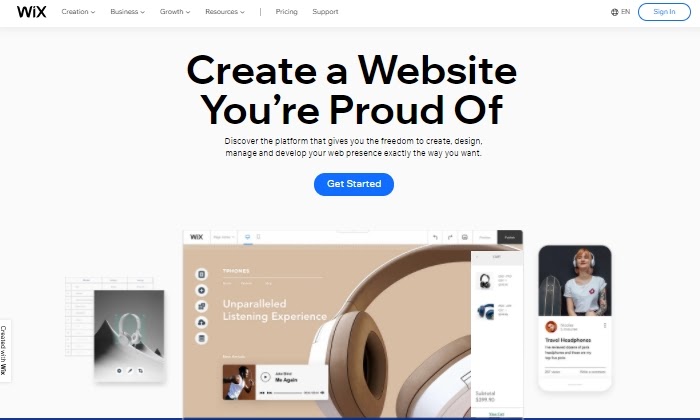
Wix: Best Free Web Hosting With Website Builder
Wix is a top choice for building a simple blog or online portfolio. With its intuitive drag-and-drop interface, you can create a website in minutes. While free accounts come with Wix brand ads, the platform offers a variety of templates and apps for customization. Upgrade to premium plans for more features like a custom domain and ad removal.
Square Online: Best Free Ecommerce Hosting Platform
Square Online is ideal for online sellers starting out. You can host unlimited products for free, with transaction fees only when you make a sale. The platform offers integration with Square POS, payment processing, and essential ecommerce tools. Upgrade to premium plans for advanced features and to scale your business.
DreamHost: Best Free Web Hosting for Nonprofits
DreamHost provides free hosting to nonprofit organizations, along with a range of additional benefits like a free domain, backups, and SSL certificate. Nonprofits can also avail of a discount on managed WordPress hosting plans. While free accounts lack 24/7 support, DreamHost offers a dedicated help center for assistance.
WordPress.com: Best Free WordPress Hosting Service
WordPress.com is a user-friendly platform for creating websites. While free accounts display ads, they include 3 GB storage, unlimited bandwidth, and an SSL certificate. WordPress.com is a great starting point for those new to website management, with the option to upgrade for more flexibility.
GitHub Pages: The Best Free Static Web Hosting for Developers
GitHub Pages is perfect for developers looking to host static websites for free. With features like custom domains, 1 GB storage, and built-in integration with Jekyll, developers can easily create and manage their sites. GitHub Pages offers a simple yet powerful solution for showcasing coding projects.

Key Considerations When Choosing Free Web Hosting
Before selecting a free web hosting service, consider factors like custom domains, security features, storage, bandwidth, ads, and customer support. While free hosting has limitations, it can be a valuable resource for certain users. Evaluate your needs and choose a hosting service that aligns with your goals.
Whether you're a blogger, online seller, nonprofit organization, or developer, there's a free web hosting solution for you. Explore the options mentioned above and start your online journey today!
Frequently Asked Questions
What is the difference in marketing and advertising?
Advertising is a type of communication that promotes products and brands. Advertising often includes a call to action such as “Buy Now!” or “Click here.”
Marketing, on the other hand is a way to communicate your company's vision, mission, and values with potential customers. Marketing helps you build relationships with your current customers as well as prospects.
Marketing can be used, for instance, to tell the story about your company and what you offer. Your history, philosophy and commitment to quality could be discussed. You could share testimonials from satisfied customers. To encourage people to visit your site, you could also create an event that gives away shoes free of charge.
In short, marketing is about telling stories. Advertising is about selling products.
Why is it important to define your brand?
A brand is simply a promise that your company makes to its customers. Your brand is a promise that your company will deliver certain benefits and qualities that will make you stand out from the rest. Your brand is what makes you stand out from other companies in your industry.
Your brand will give you authority and credibility. Potential customers instantly recognize your company's logo when they see it. You have their trust because they respect you.
Your brand is also an expression of your company's culture. Your employees will feel passionate about your brand if they are passionate about your product or services.
Your brand is much more than words and pictures. It is a promise your company keeps. It is a promise that you will provide value for your customers.
You should take into consideration several aspects when creating your brand. First, choose a name and description that clearly describes your company. If you own a bakery, Sweet Dreams Bakery would be your choice. But if you're running a software company, you'd probably go with something like DreamSpark Software.
Next, think about how your brand will look. Will your logo be easily identifiable? Will your colors match your corporate identity? Are you going to use logos?
Finally, you'll want to consider how your target audience perceives your brand. Will you portray yourself as friendly and helpful? Will you be trustworthy and professional looking? Are you able to communicate your knowledge and experience?
These are all important questions you should ask before building your brand.
What are the most effective digital marketing strategies I can use from my home?
Digital marketing can be a great way to reach customers who spend their most time online. It's also an excellent opportunity to generate leads for your business.
You can use social media platforms like Facebook, Twitter, and LinkedIn to promote your brand. You can also make use of email marketing tools for sending emails to prospects and potential clients.
There are many other marketing options that you can use to promote your product or services using digital media.
It shouldn't be difficult to get started as long as you are familiar with how to use these channels.
What are the 7 steps of internet marketing strategy?
Internet marketing strategies can be used to reach business goals via online media. These steps include research, planning, implementation, monitoring and analysis. Each step is essential for effective internet marketing and should be performed regularly.
- Planning – This step involves identifying and developing a strategy for reaching your target audience. Also, think about who might be interested in your product or service.
- Research allows you to better understand your customers' needs and interests so you can make the right product or service choices. It provides valuable insight into consumer behavior, trends, and other information.
- Implementation involves choosing a platform, such as Facebook, and deciding where to place ads. Once you have chosen your platforms, it's important to ensure that they are correctly configured. Also, decide whether to pay per click or spend money on advertising.
- Monitoring – Monitoring lets you see how your efforts are performing. Use analytics tools like Google Analytics to track traffic flows, conversion rates, and customer demographics.
- You can compare the results to benchmarks and other performance levels. This step will help you to identify areas that are underperforming.
- Optimization – Optimizing a site is making changes that increase its effectiveness in attracting visitors. You can add new features or alter how users navigate through your site.
- Evaluation – Evaluate the performance of your campaign. Is there room for improvement? If not, then you may have reached your goal. You'll still need to address any issues.
Statistics
- Many experts recommend you share 20% of your promotional content and 80% of other valuable content you find. (marketinginsidergroup.com)
- A poll earlier this year found that 14% of older Gen Z's had bought an item in the previous six months based on an influencer's recommendation. (influencermarketinghub.com)
- Meanwhile, a PartnerPath poll found that co-marketed ads help 68% of consumers arrive at a buying decision before even speaking to a salesperson. (influencermarketinghub.com)
- 81% of brands employ affiliate marketing, and eCommerce sites are particularly good candidates. (blog.hubspot.com)
- This allows us to deliver CPCs that are 80% less than average and CTRs 4-5 times higher than average. (marketinginsidergroup.com)
External Links
youtube.com
hubspot.com
blog.hubspot.com
statista.com
How To
How to get your Google Digital Marketing Certificate & Ecommerce Professional Certificate
Google offers a free online course entitled Search Engine Optimization For Beginners. This is a great place to learn how your website can be optimized for search engines such Google.
The course covers important SEO topics, such as page titles and meta tags, internal linking, site speed, and internal linking. These lessons will improve your website's performance if it already exists.
After completing the course, you'll receive a certificate of completion. This certificate is valid two years and can be used to add “SEO”, to your LinkedIn profile.
You will also receive 10 CPE credits for completing the course. These credits are accepted by most colleges and universities.
Google also provides a paid certification program called Google Certified Partner (GCP). Candidates must pass a rigorous exam, and provide proof of their experience to become GCP certified.
————————————————————————————————————————————–
By: 2974
Title: Top Free Web Hosting Services: A Comprehensive Review Guide
Sourced From: internetlib.org/best-free-web-hosting/
Published Date: 7/16/2021 5:17:41 PM