
Building a contact list is essential, but managing it efficiently is crucial for successful sales operations. The best contact management software offers more than just basic information storage; it helps track interactions, convert prospects into leads, and ensure no deals fall through the cracks. Streamline your sales process to close deals faster, retain valuable customers, and expand your business.
Choosing the Right Contact Management Software
When selecting a contact manager for your sales system, it's essential to consider the features that align with your business needs. In this comprehensive guide, we will explore five leading contact management tools, highlighting their key features and pricing.
HubSpot Review: The Ultimate Free Contact Management Software
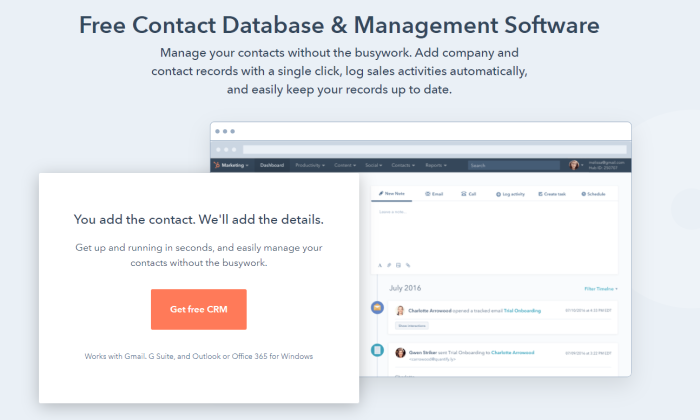
HubSpot offers a powerful free contact management system that integrates seamlessly with various sales processes. In addition to contact management, HubSpot's CRM software includes tools for sales, marketing, and customer service, making it a comprehensive solution for businesses. The platform's focus on inbound marketing and lead generation ensures that you attract and engage potential customers effectively.
HubSpot's free version provides a wide range of features, including website activity tracking, deal management, email tracking, and more. It serves as an excellent starting point for businesses looking to enhance their contact management capabilities without incurring additional costs.
Bigin Review: Simplified Contact Management Solution
For small and mid-sized businesses seeking a user-friendly contact management system, Bigin (formerly Zoho Contact Manager) offers a simple yet effective solution. With a consolidated dashboard and intuitive interface, Bigin allows users to streamline contact management tasks, track revenue numbers, and schedule follow-up activities effortlessly.
Whether you opt for the free version or the paid Express plan, Bigin provides a cost-effective solution for managing contacts and enhancing sales processes.

Pipedrive Review: Visual Contact Management at Its Best
Pipedrive stands out for its visual approach to contact management, making it easy to track and automate sales tasks. With features like task automation, lead pipelines, and smart lists, Pipedrive simplifies the sales process and enhances team collaboration. The platform's user-friendly interface and customizable tools cater to businesses of all sizes, making it a popular choice among companies worldwide.
Considering Pipedrive's pricing plans, ranging from Essential to Enterprise, businesses can choose a package that aligns with their contact management needs and budget.
Zendesk Review: Enhancing Contact Management with Analytics
Zendesk offers a dynamic contact management solution that emphasizes reporting and analytics capabilities. By leveraging pre-built analytics features, businesses can gain valuable insights into customer interactions, response times, and sales performance. Zendesk's rich reporting tools enable teams to optimize their sales strategies and enhance customer engagement effectively.
With pricing tiers starting from Team to Elite, Zendesk provides scalable solutions for businesses looking to elevate their contact management and customer relationship efforts.
Salesforce Review: Scalable Contact Management for Business Growth
As a versatile and comprehensive CRM platform, Salesforce offers scalable contact management tools designed to support business growth and streamline sales operations. With features like contact history tracking, social data integration, and mobile accessibility, Salesforce empowers teams to collaborate effectively and drive sales success. The platform's pricing plans cater to businesses of all sizes, ensuring that companies can choose a package that suits their specific requirements.
By exploring Salesforce's Essential to Unlimited plans, businesses can access a range of features, including account management, email integration, and mobile app capabilities, to optimize their contact management strategies.

Key Factors to Consider When Choosing Contact Management Software
When evaluating contact management software, it's crucial to consider factors such as reporting capabilities, software fit for your sales process, and user experience. By assessing these key criteria and aligning them with your business needs, you can make an informed decision that enhances your contact management efficiency and drives sales growth.
Choosing the right contact management system is essential for maximizing sales potential, reducing sales cycles, and achieving business growth. By leveraging the features and benefits of leading contact management tools like HubSpot, Bigin, Pipedrive, Zendesk, and Salesforce, businesses can optimize their contact management processes and drive sales success effectively.
Frequently Asked Questions
Are there any dangers associated with digital advertising?
Yes, there are several risks involved in digital marketing.
You must first protect your online reputation through being cautious about what you share on social media.
You must also ensure that your content is original and doesn't infringe upon any other intellectual property rights.
If you don't monitor your online presence, you could lose control of your brand image.
Lastly, you may be subject to identity theft if someone uses your details without permission.
How to Protect your Online Reputation
- Be careful about what you share on social networks
- Ensure that All Content Is Original, and Doesn't Infringe upon Any Other Intellectual Property Rights
- Monitor Your Brand Image
- Use Strong Passwords
- You should not use personal information without permission
- Report Unauthorized Activities Immediately
- Don't Post Photos Of Yourself Or Others In A Disturbing Way
- Never divulge your social security number
- Keep up with the latest news
- Avoid Scams
- Select a Secure Password
- Always keep an eye out for new updates
- Don't give away too much information
- Be Vigilant When Giving Out Credit Card Numbers
- Avoid sending money by E-Mail
- Check For Fake Websites
- Bad reviews can be a big problem for your business
- Regularly review your credit reports
- Keep An Eye On Your Privacy Settings
- Ask someone you know before sharing anything
What is eCommerce marketing?
Ecommerce marketing can be described as online shopping. It is the act of selling products online. This includes purchasing goods from companies, and then selling them via the internet. This would include selling on eBay if you are an individual seller. You could also set up a business to sell your goods for profit. Selling items online is the key to making money.
Here are more details concerning eCommerce marketing
It is important to determine what kind of products you wish to sell in order for your eCommerce site to be successful. Then, you should decide whether you want to offer only one item (like a book) or multiple kinds (such as books and DVDs).
Once you have an idea of the products you want to offer, it's time to search for suppliers. A supplier is an organization that manufactures and sells the product you wish to sell. For example, if you wanted to start selling greeting cards, you'd need to find a supplier that made and sold greeting cards.
Once you have found a supplier, you need to make a website that will display the products for buyers. Some suppliers provide templates you can use; others require you to design your template. After you have your website built, it's time to market it. This involves posting articles on forums and websites, advertising on Google Adwords and emailing relevant contacts.
There are many ways to promote your eCommerce store. These include email marketing, search engines and social networks.
- Email marketing is a good choice for most businesses. It's cost-effective and easy to implement. And it delivers results. However, it can take a lot effort and time to generate quality leads.
- SEO (search engine optimization) is a technique that helps improve a webpage's rankings for keywords. Link building is a common method to improve pages' rankings in search engines.
- Social networking sites such as Facebook and LinkedIn are becoming increasingly crucial for promoting businesses. Many people use these websites every day to stay in touch with family and friends. If you post useful articles, you can reach thousands of people.
- Mobile apps are also a valuable tool for eCommerce marketers. People love to shop on their smartphones and tablets. An app allows customers to be reached wherever they may be.
eCommerce has been a growing business. There are many avenues to promote your small business. Choose wisely so you can reap the benefits of eCommerce marketing.
What are 3 examples in internet marketing?
Internet Marketing can be described as a broad term that covers online activities to promote products and/or services. Internet marketing can include email marketing, social media marketing and search engine optimization (SEO), as well as pay-per-click marketing (PPC) and website design.
This does not mean you need to spend money to make it happen. There are plenty of ways to generate income without spending any cash whatsoever. But, the higher your return, the more you will invest in each option.
Email marketing is the most popular form of internet marketing. This involves sending out emails to potential customers, informing them about your business and its latest offers.
Another popular way of advertising is through Social Media Marketing. Facebook, Twitter and LinkedIn are all great platforms for sharing information and interacting with friends and loved ones. These sites also provide businesses with an excellent opportunity to connect with their clients and increase awareness of their products or services.
Search Engine Optimization is a technique for increasing the visibility and popularity of websites on major search engines. Webmasters have the ability to increase traffic to their sites by improving the quality or quantity of relevant backlinks.
Website design is the art and science of designing websites that are attractive and work well. Website designers create the website's layout and style. Website designers also ensure accessibility standards are met and that technical specifications are adhered to.
Pay Per Click Advertising (PPC) is advertising where advertisers bid on keywords related to their products or services. Advertisers are paid for each click on their ads. PPC ads appear on search results pages at the top or bottom.
What is the difference of advertising and marketing?
Advertising is a form or communication that promotes products, brands, and services. Advertising usually has a clear call to action, such as “Buy now!” You can also click here.
Marketing, on the other hand is a way to communicate your company's vision, mission, and values with potential customers. Marketing also helps build relationships with current customers and prospects.
You might use marketing to tell the world about yourself and your products if you sell footwear online. You might talk about your background, philosophy, or commitment to quality. You might share customer testimonials. Or you might even create an event where you give away free pairs of shoes to encourage people to visit your website.
Marketing is all about telling stories. Advertising is selling things.
Statistics
- In 2017, 34% of marketers cited co-branding as the most effective way to increase the number of email subscribers. (influencermarketinghub.com)
- 81% of brands employ affiliate marketing, and eCommerce sites are particularly good candidates. (blog.hubspot.com)
- This allows us to deliver CPCs that are 80% less than average and CTRs 4-5 times higher than average. (marketinginsidergroup.com)
- A poll earlier this year found that 14% of older Gen Z's had bought an item in the previous six months based on an influencer's recommendation. (influencermarketinghub.com)
- Many experts recommend you share 20% of your promotional content and 80% of other valuable content you find. (marketinginsidergroup.com)
External Links
blog.hubspot.com
moz.com
- SEO Learning Center – Moz
- [Case study] How we ranked #1 in a high-volume keyword in under 3 months – Moz
statista.com
neilpatel.com
How To
How do I know whether or not my branding efforts are working?
Asking customers directly is the best method to measure your success. Ask them what their opinions are about your brand. What do they love most about your company's brand? What don't they like? How can you improve?
You can also use social media to conduct surveys like on Facebook or Twitter. Simply ask your followers to rate you brand by posting a question. Next, analyze the results to find out which aspects of your brand have been most successful.
Check out customer reviews. Customers love to share their experiences with businesses, whether they are happy or dissatisfied. You can learn a lot from these comments about your brand.
Here are some tips to help you improve your brand.
- Be consistent. Don't change your marketing materials every time you release a new product. Your message should remain the same across all channels.
- You can use multiple channels. Promote your brand using multiple channels, including email, websites, social networks, and other forms digital communication.
- Make sure you're giving your customers what they want. You should offer free shipping. You could lose customers who expect easy delivery.
- Remember that your brand is more than just a logo. Your brand represents everything about your company. So, take the time to create a well-rounded image.
- Get feedback from customers. You'll be more successful if you listen to your customers sooner.
- Test different messages. It is possible that one message performs better than another. Or perhaps you have two similar messages and one gets more attention than the other. You can monitor your stats to determine which message is performing the best.
- You can improve your brand by looking for ways. Are there any areas where you could be doing things differently? Perhaps you could add more videos on your website. Perhaps you could add more customer testimonials to your blog posts.
- Create a plan. After you have established your goals and objectives, it is time to create a plan for reaching them. This involves establishing a time frame for each goal. It also means setting up milestones along the way so you can track your progress.
- Your results should be measured. Once you achieve your goal, stop measuring. Instead, establish a system to track your progress over time. This will help you to know if your progress is steady towards your ultimate goal.
- Repeat! Now that you've established a solid foundation for your brand, you'll want to continue to build upon it. If you have difficulty keeping up your current marketing efforts, you might consider hiring someone else.
- Positive thinking is key. Negative feedback should be taken seriously, but not ignored. Instead, you should focus on how this information can be used to improve your brand.
- Make the most of technology. The technology has given us many tools we couldn't have imagined. Use them to your advantage. For example, you could create a mobile app for your brand.
- Try thinking outside the box. You don't have to be afraid of trying something new. Do it with thought.
- Have fun with it. Marketing isn’t supposed to stress you. It's often referred to as “fun marketing.” Try to have fun while you work.
- Know when to quit. When you feel like your efforts have been in vain, it's OK to give up. However, don't lose heart too soon. Sometimes, you must stick with something until you get the desired result.
- Keep your consistency in mind. Consistency will be your key to success. Spend some time creating a schedule for you brand.
- Be patient. Building a successful brand takes time. It won't happen overnight.
- Keep learning. Marketing is always changing. You can stay up to date by reading blogs, or even attending webinars.
- Never stop learning. You can still learn new things even after reaching your goal.
- Enjoy the journey. Marketing is fun. Marketing shouldn't be a chore.
————————————————————————————————————————————–
By: 2970
Title: Top Contact Management Software for Efficient Sales
Sourced From: internetlib.org/best-contact-management-software/
Published Date: 7/16/2021 4:41:14 PM