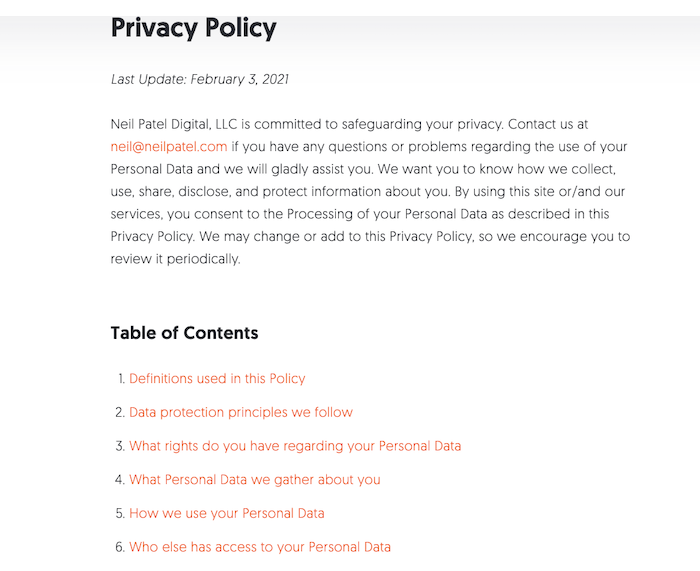

If you collect information from your website visitors, you may need to have a privacy policy in place to comply with legal requirements. Not all countries have privacy policy mandates, but many have auxiliary laws that necessitate having a privacy policy. Moreover, if you aim to reach a global audience, following international guidelines is crucial.
Importance of Privacy Policies
Privacy policies inform website users about the collection, storage, and usage of their personal information. Personal information includes details like names, addresses, credit information, and online behaviors. The definition varies by country and laws, so it's essential to research the specific requirements before using a privacy policy generator.
Key Elements of a Privacy Policy
A comprehensive privacy policy should outline:
- The information collected from website visitors
- The methods and reasons for collecting this information
- How the collected data is stored
- How and when users will be notified of updates to the privacy policy
- Third parties with access to the collected information (e.g., third-party applications, analytics tools)
Reasons Why Your Website Needs a Privacy Policy
1. Compliance with Laws: Privacy policies are often legally required in many countries to ensure citizens understand their data rights. For instance, in the US, laws like COPPA, CalOPPA, and the Gramm-Leach-Bliley Act mandate privacy policies for specific sectors.
2. Building Trust: Displaying a privacy policy shows transparency and care for user privacy, enhancing trust in your business. It also demonstrates proper data handling procedures.
Best Privacy Policy Generator Tools
1. FreePrivacyPolicy: This tool helps you generate privacy policies that comply with various regulations like CCPA, GDPR, and more. It also offers terms and conditions, cookie policies, and more.

2. Shopify Policy Generator: Create personalized privacy policies with this tool, ensuring global compliance and customer trust.
3. Privacy Policies: Generate privacy policies, EULAs, terms and conditions, and more tailored to your industry and operations.
4. Privacy Policy Online: Comply with international laws like CCPA, CalOPPA, and GDPR using this tool, which also caters to advertising networks' requirements.
5. Termly: This tool is effective for GDPR, CCPA, Google Analytics, and more, with automatic updates when new legislation is passed.
Privacy Policy Generator FAQs
Can I utilize a privacy policy generator? Yes, these tools help create compliant documents on how you handle user information.
How can I create a privacy policy for free? Many generators offer free services, ensuring cost-effective compliance.

Is it okay to copy someone else's privacy policy? No, privacy policies are copyrighted, and it's crucial to create a unique policy for your business.
Creating a personalized privacy policy is essential for legal compliance and building trust with users. These generator tools can simplify the process and ensure your website meets global standards.
Frequently Asked Questions
Why is it so important that your brand is defined?
A brand is simply a promise that your company makes to its customers. A brand promises specific qualities and benefits that make your company stand apart from other companies. Your brand is what makes you stand out from other companies in your industry.
Your brand will give you authority and credibility. Potential customers recognize your logo as a sign that you stand behind your products and services. They trust you because they have respect for you.
Your brand is also a reflection of your company's culture. Your employees will feel passionate about your brand if they are passionate about your product or services.
Your brand is more that words and photos. Your company must live up to this promise. It is your promise to offer value to your customers.
When you set out to develop your brand, you need to consider several factors. First, you need to choose a name which clearly describes the company's mission. Sweet Dreams Bakery, for example, would be a great name for a bakery. You'd choose DreamSpark Software if you were running a software firm.
Next, decide how you want your brand to be represented. Will you use a recognizable symbol? Will your colors match your corporate identity? Are you going to use logos?
You should also consider how your target audience views your brand. Can you project a friendly and helpful image? Do you project professionalism and trustworthiness? Will you be able to demonstrate your expertise and knowledge?
These are all important questions you should ask before building your brand.
How do you build an Ecommerce Marketing Plan
The first step is to define what you want. These should include products and/or services relevant to your business, but also enough variety to keep customers engaged.
The second step is determining how much money you need to spend on advertising, promotions, and other marketing techniques. Multiple methods may be required, including direct mail, email blasts and social media sites. Search engine optimization is another option.
Once you know how much money you need, you can start developing a budget for each method. You might want to consult an expert in e-marketing if you aren't sure which marketing strategy is best for you business. They will help you decide which method is right for your business.
Once you have created a plan, it's time to start implementing it. This can be made easier by hiring someone to do the job for you.
Don't reinvent the wheel and start from scratch. Be sure to use proven strategies that are working for other online sellers. Before making any changes, make sure to test it all.
Remember that your ultimate goal should be to increase sales and profit. Your eCommerce marketing strategy must take into account both short-term goals and long-term plans.
We have some eCommerce marketing tips that will help you boost your sales. We hope you find them useful!
How does marketing fit into business strategy?
Marketing is part of every business strategy. Without marketing, there would be no way to tell the world what your company does. Without sales, marketing would not be possible. Therefore, marketing is crucial to any business strategy.
But not everyone understands the importance of marketing. Many people think that marketing is only about spending money on advertising campaigns. Marketing goes far beyond advertising campaigns. Marketing includes everything you do in order to communicate the company's identity, position and value in the marketplace.
When you think about your business, ask these questions: What image am I trying convey? What image will I project to my customers? How should my world perceive me?
If you don't have the answers, marketing isn't something you've considered.
What are 7 steps in an internet marketing strategy plan?
Internet marketing strategies are used for achieving business goals using online media. The seven main steps include planning and research, implementation, monitoring as well as analysis, optimization and evaluation. Each step is vital for successful internet marketing and should all be completed regularly.
- Planning – This step involves identifying and developing a strategy for reaching your target audience. Consider the product or services you offer, as well as who might be interested.
- Research helps you understand your customer's needs and interests, so you can determine which products or services best match their expectations. It provides valuable insight into consumer behavior, trends, and other information.
- Implementation includes choosing a platform (e.g., Facebook) and determining where to place your ads. Once you have selected your platforms, make sure that they are correctly set up. Also, decide whether to pay per click or spend money on advertising.
- Monitoring – Monitor your progress to ensure that you are able to see the results of your efforts. Google Analytics provides analytics tools that allow you to track traffic flows and conversion rates.
- The analysis allows you to measure results against benchmarks and previous performance levels. This step will guide you on how to improve if there are areas that are not performing well.
- Optimization – Optimizing the site is about making improvements to make it more attractive to visitors. For example, you could add new features or change how users navigate your site.
- Evaluation – This is where you can assess how your campaign is performing. Are there opportunities to improve? If not then you may not have met your goal. If you have any questions, it is important to revisit the situation.
Statistics
- Today, 81% of brands around the world have affiliate programs. (influencermarketinghub.com)
- Companies that use personalization are seeing revenue increases ranging from 6-10%. (blog.hubspot.com)
- This allows us to deliver CPCs that are 80% less than average and CTRs 4-5 times higher than average. (marketinginsidergroup.com)
- Meanwhile, a PartnerPath poll found that co-marketed ads help 68% of consumers arrive at a buying decision before even speaking to a salesperson. (influencermarketinghub.com)
- In 2017, 34% of marketers cited co-branding as the most effective way to increase the number of email subscribers. (influencermarketinghub.com)
External Links
moz.com
- SEO Learning Center Moz
- [Case Study] How Moz Ranked #1 for High-Volume Keywords in Less Than 3 Months – Moz
neilpatel.com
blog.hubspot.com
statista.com
How To
Six Types Ecommerce Marketing
How can I market my eCommerce store
Ecommerce marketing represents one of most difficult marketing tasks. This requires you to get to know your customers, their buying habits, and how they interact and use your products and services. This knowledge can help you create a strategy to achieve your goals.
There are six types or eCommerce marketing strategies.
- Product Strategy: The first step in product strategy is to decide what type of product you want. There are three major categories: physical goods (things), virtual goods (services) and membership sites. Once you have determined which category you want, you can decide whether or not to offer wholesale prices. Wholesale pricing is when you decide the price at which you will sell your products. Retail pricing means that you charge your customers directly for your products.
- Pricing Strategy – Next, you need to figure out how much you want to make from selling your products. Profit margins, competition and shipping costs are all important factors. Two ways to increase profits are possible when pricing your strategy: reduce your cost per sales and/or increase the volume of your sales.
- Promotion Strategy – Now comes the fun part! The best promotion strategy for your business is one that you have developed. One strategy is to offer free shipping and special discounts. If you don’t have any ideas for promotional products, brainstorm some.
- Shipping Strategy – After you've figured out how to promote your products, you need to think about how you will get them to people. Will you ship via USPS/FedEx, UPS, DHL or another delivery method? Do you prefer to use a fulfillment centre or are you able to do everything yourself?
- Merchandise Management System. This software allows you to track inventory, fulfill orders, track orders, and communicate effectively with suppliers. You have the option to choose from many systems, depending on your preferences and budget.
- Customer Service Strategy: Finally, it is important to create a customer-friendly strategy for your company. Is your business going to offer email or phone support? Are you able to provide support via email or live chat?
————————————————————————————————————————————–
By: 2914
Title: Top 5 Privacy Policy Generator Tools for Your Website
Sourced From: internetlib.org/5-privacy-policy-generator-options-for-your-website/
Published Date: 7/11/2021 4:35:17 PM