
Imagine the impact of a perfect image in a boardroom – it can seal the deal with a new client, win over your boss, or rally your team together. That's the power of data visualization tools. They have the magic to turn intricate data sets into clear, compelling visuals that tell stories on their own.
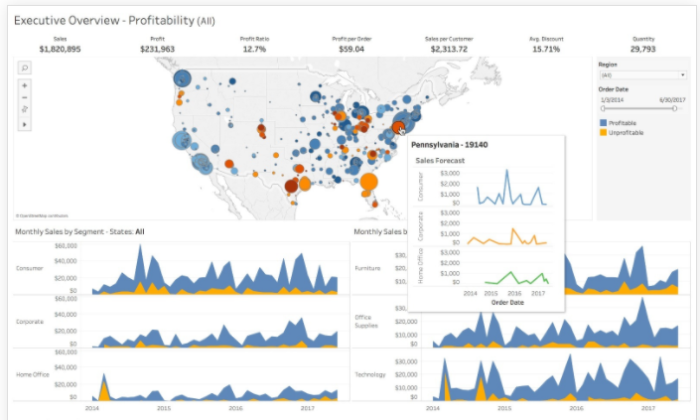
Tableau: Empowering Enterprises with Data Insights
When it comes to business intelligence, Tableau shines as a standout choice. It boasts exceptional data visualization capabilities that set it apart. While it might not be the most budget-friendly option, Tableau offers an intuitive interface and the freedom to explore various data sources effortlessly.
Unlocking User-Friendly Data Exploration
Tableau's strength lies in its user-friendly approach, catering to middle managers and top executives alike. No constant hand-holding required. Moreover, Tableau instills a data-driven mindset within organizations by offering secure governance tools and flexible on-premises deployment.
Infogram: Elevating Team Collaboration Efforts
Enter Infogram, an intuitive tool that empowers users to craft impressive reports, slides, dashboards, and social media visuals with ease. Its user-friendly interface and drag-and-drop functionality make teamwork a breeze, resulting in visually stunning and consistent content.
Seamless Integration for Enhanced Productivity
Infogram doesn't stop there – it provides a treasure trove of design options, from stock images to interactive charts, making data integration with platforms like Google Analytics a walk in the park. Plus, its pricing caters to all, from individuals to large enterprises.
Plecto: Revolutionizing Sales Team Performance
Plecto is your go-to for a data-centric team culture, offering real-time insights into key performance indicators through interactive dashboards. What's unique? Its gamification element, allowing for KPI-based contests that fuel healthy competition and motivation among team members.

Customized Performance Tracking for Sales Teams
With tailored KPIs, seamless database integrations, and milestone notifications, Plecto is a sales team's dream come true. It offers flexible pricing plans to suit teams of all sizes and needs.
Datawrapper: Empowering You with DIY Data Visualizations
Datawrapper simplifies the creation of interactive charts, maps, and tables without the need for technical wizardry. Trusted by big names like The New York Times, it enables users to transform complex data into engaging visual stories effortlessly.
Effortless Visualization for All
Enjoy features like easy data import, various chart types, live-updating graphics, and collaboration tools. While the free version caters to internal use, premium plans unlock advanced customization for public-facing visualizations.
Highcharts: Your Gateway to Interactive Visuals
Highcharts is your one-stop solution for embedding interactive charts into web and mobile projects seamlessly. With a focus on versatility and compatibility, it offers a plethora of features like diverse map options, export capabilities, and mobile-friendly designs.
Tailored Visual Solutions for Every Business
For personal or non-profit use, Highcharts is free, while businesses can delve into custom pricing plans for interactive visualizations that suit their unique needs perfectly.
When it comes to choosing the right data visualization tool, it's all about aligning with your specific requirements and business goals. Whether you're after enterprise capabilities, seamless collaboration, enhanced sales team performance, DIY visualizations, or interactive graphics, there's a tool waiting to transform your data into captivating stories.

Frequently Asked Questions
What is eCommerce Marketing?
Ecommerce marketing is simply online shopping. It's the act and practice of selling products on the internet. This includes buying goods from companies and selling them over the web. If you're an individual seller, this would also include selling on eBay. You could also set up a business to sell your goods for profit. Selling products online is the best way to make money.
Here are more details concerning eCommerce marketing
Creating a successful eCommerce site involves finding out what type of products you want to sell. Next, decide whether to sell one product (such as a book), or multiple products (such books and DVDs).
Once you know what your product is, you need to find suppliers. A supplier can be a company that makes or sells the product you're looking for. If you wanted to start selling greeting card, you would first need to find suppliers that make and sell them.
After you've found a supplier, you'll need to create a website to display the products and allow buyers to purchase them. Some suppliers offer templates that you can use, while others require you create your template. Once you have a website, you will need to market it. This could include publishing articles on blogs or forums, advertising on Google Adwords websites and sending emails relevant to contacts.
There are many ways to promote your eCommerce store. These include email, search engines, social networks, and mobile apps.
- Email marketing can be a good option for most businesses. It is cost-effective, straightforward to implement, as well as delivering results. However, generating quality leads requires a lot of effort and time.
- Search engine optimization (SEO), is a technique that improves a website's ranking for certain keywords. This is usually done by link building which improves pages ranking in search engines.
- Social networking sites such as Facebook and LinkedIn are becoming increasingly crucial for promoting businesses. These social networking sites are used daily by millions of people to communicate with their families and friends. You can get exposure to thousands of new customers if you post interesting articles there.
- Mobile apps are also a valuable tool for eCommerce marketers. People love shopping with their tablets and smartphones. Apps allow you to reach customers from anywhere.
In summary, eCommerce has become a big business. There are many avenues to promote your small business. Choose wisely so you can reap the benefits of eCommerce marketing.
Social Media Marketing is a great way to promote your business online. It's an excellent tool for spreading brand awareness and generating leads and sales. Here are five methods to leverage social media marketing to increase your business.
- Create a Facebook Fan Page – This allows you to interact directly with customers on Facebook. You can upload photos, videos and other files.
- Twitter Promote Your Business – Twitter offers a great way to share information and connect people. Increase visibility by using hashtags
- Post Videos on YouTube – Uploading videos is very popular because many people enjoy watching them. If people like what they see, they may click on your website.
- Host Live Events – Having live events allows you to meet face-to-face with potential clients. They can ask questions about your products and services.
- React to Customer Review – Positive reviews will build trust between you and your clients, which in turn will encourage repeat purchases. Respond quickly to any negative comments.
How to Make an Ecommerce Marketing Plan
The first step is to identify what you want to sell. It should be related to your business. However, it should also include enough variety to keep customers interested.
The second step involves determining the amount of money that you are willing to spend on marketing, advertising promotions, or other methods. Multiple methods may be required, including direct mail, email blasts and social media sites. Search engine optimization is another option.
Once you have an idea of how much money is needed, you can begin to create a budget. Asking a specialist in e marketing might help you decide which marketing method is right for your business. They will help you decide which method is right for your business.
Once you have your plan in place you can begin to implement it. You can also hire someone to help you with the work.
Don't reinvent the wheel and start from scratch. Use proven strategies that have worked well for other online retailers. Be sure to verify everything before you make any changes.
It is important to remember that your ultimate goal in eCommerce marketing is to increase profits and sales. Your eCommerce marketing strategy has to take into consideration both short-term goals, and long-term objectives.
Read our article about eCommerce Marketing Tips if you are looking to increase your sales. We hope these tips help you to achieve success.
What are some indirect marketing examples?
Think of ways you could use indirect marketing techniques to promote your business. A social media campaign might encourage people to share photos of themselves using your product. This would spread awareness about your brand.
If you own an auto repair shop, you could post advertisements in local papers encouraging readers to take their cars to your garage instead of going to other shops.
Another example is to send coupons to customers via e-mail or place ads on bulletin boards at public locations.
Indirect marketing works because it doesn’t cost much.
You will need patience to promote your business. It takes time for people to trust you.
Also, you need to monitor how effective your campaigns perform. You can also measure the number of leads each method generates.
This will allow you to see which methods are most effective for your business.
Statistics
- A poll earlier this year found that 14% of older Gen Z's had bought an item in the previous six months based on an influencer's recommendation. (influencermarketinghub.com)
- From 2020 to 2022, eMarketer predicts that digital marketing will grow by 36% and take up 54% of marketing budgets! (marketinginsidergroup.com)
- Meanwhile, a PartnerPath poll found that co-marketed ads help 68% of consumers arrive at a buying decision before even speaking to a salesperson. (influencermarketinghub.com)
- Companies that use personalization are seeing revenue increases ranging from 6-10%. (blog.hubspot.com)
- Many experts recommend you share 20% of your promotional content and 80% of other valuable content you find. (marketinginsidergroup.com)
External Links
statista.com
neilpatel.com
hubspot.com
blog.hubspot.com
How To
Online marketing content should be relevant to your audience. If your audience doesn’t care about you product or your service, why would they want to read your blog posts?
Your website should be focused on fashion accessories. Not general web design tips.
As a way to market your business, you can use social media platforms like Facebook, Twitter and LinkedIn. Businesses can use social media platforms to communicate with customers and share information.
Social media sites also provide a great opportunity to connect with existing and potential clients.
You should create content that engages users, encourages them to share and encourages them. Shared content can reach more people and increase traffic to your site.
Keep your content fresh by creating regular updates. Posting once a month or more is better than posting daily.
Because readers expect new content, a lot of engagement is given to posted content.
Link to your homepage in your content. This helps visitors find additional resources on your site.
Make sure that your content is mobile-friendly Mobile devices now outnumber desktop computers. According to a recent survey, more than 50% of internet users access websites via their smartphones.
Test it on various smartphone and tablet browsers to ensure your content looks good when viewed on small screens. In conclusion, the mobile-first approach should be a no-brainer for any website owner or developer.
It's not just about aesthetics, either. Mobile websites convert better than desktop ones. They are easier to navigate and load faster due to their smaller size.
Content that is valuable to your audience.
————————————————————————————————————————————–
By: 3005
Title: The Ultimate Guide to Data Visualization Tools: Unleashing the Power of Visual Data
Sourced From: internetlib.org/data-visualization-tools-a-comprehensive-review/
Published Date: 2/20/2026 9:22:58 PM