
So, you've got a marketing plan in place, but is it enough to guarantee success? Not quite. To truly thrive, you need well-thought-out marketing objectives that pave the way for achieving your business goals. These objectives are the guiding stars that illuminate your path, not just for your overall marketing strategy but also for specific areas like paid social media marketing.
Decoding the Essence of Marketing Objectives
Picture marketing objectives as a roadmap – they are precise, measurable, and crystal-clear destinations that propel your business forward. They encompass a variety of goals, from profit-driven milestones like boosting sales to growth-oriented targets such as expanding your subscriber base or fan following, all the way to visibility-centric aims like attracting unique visitors. Typically, these objectives adhere to the SMART criteria for goal setting.
The SMART Approach to Marketing Objectives
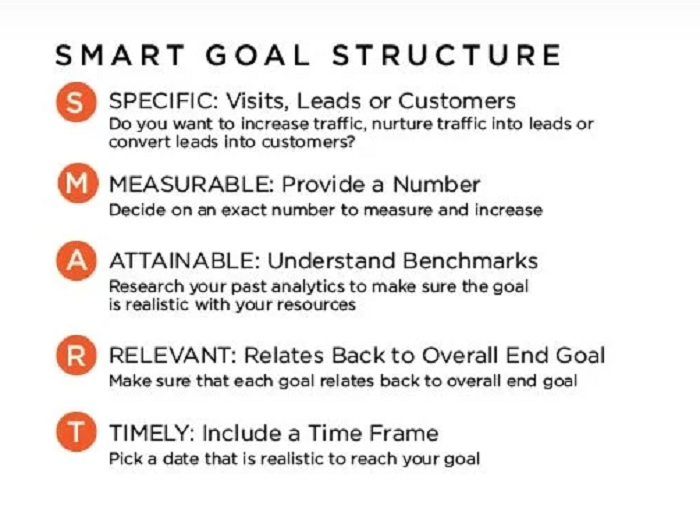
SMART, an acronym for Specific, Measurable, Attainable, Relevant, and Timely, is your key to unlocking success. By customizing your objectives through this lens, you can craft a roadmap that leads straight to triumph. Think about setting specific targets for visits, leads, or customers, providing measurable metrics, ensuring achievability, aligning with your core objectives, and setting realistic deadlines.
Diverse Landscape of Marketing Objectives
1. Boosting Brand Awareness:
Focus on metrics like social media visitors, page visits, and target demographic engagement to elevate your brand visibility.
2. Fostering Repeat Visitors:
Enhance on-page retention, ignite social media interactions, and diminish bounce rates to cultivate user loyalty.
3. Expanding Subscriber Base:
Set your sights on growing subscriber numbers and curbing unsubscriptions to expand your audience reach.

4. Launching a New Product:
Direct traffic to new product landing pages, amplify social media interactions, and drive sales through organic channels.
5. Driving Sales Growth:
Improve conversion rates, collaborate with influencers, and escalate affiliate sales to boost your revenue streams.
6. Maximizing Revenue Streams:
Concentrate on boosting profit margins, trimming marketing expenses, and reducing customer acquisition costs to elevate overall revenue.
7. Fine-tuning the Conversion Funnel:
Spot and mend weak spots in the conversion funnel, amplify conversions, and cut down on customer acquisition expenses.
8. Expanding Your Digital Footprint:
Share captivating content, grow your social media followers, and engage with fresh users daily to broaden your online presence.
9. Engaging International Audiences:
Set objectives to connect with users in specific countries, convert global visitors, and interact with an international audience.

10. Enhancing On-site Engagement:
Decrease bounce rates and prolong user reading time to enrich user interaction with your platform.
Selecting and Achieving Marketing Objectives
Develop a Strategy:
Start by aligning your marketing objectives with your business aspirations, seek diverse viewpoints, narrow down your options, put your goals to the test, and iterate with fresh objectives. Remember to regularly monitor progress, track SMART goals, and integrate expert insights to effectively conquer your objectives.
Frequently Asked Questions
What kind of eCommerce Marketing Strategy Should I Follow?
There are three types in eCommerce marketing:
- Direct marketing
- Search Engine Optimization (SEO)
- Social Media Marketing
Direct marketing refers to sending emails directly towards potential buyers. Emails could include coupons, discounts, or special offers. This type of marketing is designed to build customer loyalty.
Search engine optimization involves improving the ranking of your site in search engines like Google and Yahoo. Your site will appear near the top results for keywords related to your product/service. This will increase your traffic.
Social media marketing involves websites such as Twitter and Facebook, Pinterest, Instagram and YouTube. To connect with your audience. It's easy to set-up and use, and it's effective.
Each method has its advantages and disadvantages. SEO, for example, requires time and effort while direct marketing is more efficient. However, if you only focus on one method, you won't see the full benefit of eCommerce marketing. Therefore, we recommend combining different types of marketing.
You could, for example, send emails advertising your products to rank high in search engine results. You could also advertise through social media and then link from that page to your website.
There are many ways to market an eCommerce store. Select the best options for your company and keep them in place over time. Good luck!
What are some examples for indirect marketing?
Consider indirect marketing options that could be used to promote your business. One way is to encourage people on social media to share pictures of yourself using your product. This could help spread word about your brand.
Advertisements in local newspapers could be used to encourage readers to visit your auto repair shop rather than other shops.
Others include posting advertisements on bulletin boards or sending coupons to customers’ e-mail addresses.
Because it costs little, indirect marketing works great.
But trusting people takes time. You'll need patience as you promote your business.
You also need to keep track of how effective your campaigns are. Track the number leads generated by each method.
This will give you an idea of the best methods for your business.
What are 5 marketing concepts you should know?
The following five marketing concepts can be used:
- Branding – A brand is what people think of when they hear your name. It's what people see when they hear your brand name. It is important to have a consistent brand identity across all media.
- Positioning – How you position yourself in your market. What are you describing about yourself and why should others care?
- Message – This is the content of your message. What is your point? What's the point?
- Marketing mix – This is a combination of channels, pricing and promotions that enables you to reach your target audience.
- Measurement – How do you measure success?
What are the 4 types?
Marketing is broken down into four main categories: Direct Mail Marketing and Traditional Advertising. Public Relations is also included. Digital Marketing falls under the umbrella of digital marketing. Each has different objectives, and each should be used for specific purposes. This way, you can use them together to reach your goals.
What are the 7 Steps of Internet Marketing Strategy?
Internet marketing strategies are used to achieve business goals through online media. The seven main steps include planning and research, implementation, monitoring as well as analysis, optimization and evaluation. Each step should be repeated regularly to ensure effective internet marketing.
- Planning – This step involves identifying who your target audience is and creating a plan of how to reach them. Also, think about who might be interested in your product or service.
- You can understand the needs of your customer and help you choose the best products or services to meet them. It also gives you valuable insights into popular trends and consumer behavior.
- Implementation is as simple as choosing a platform such Facebook and deciding where to put your ads. Once you've chosen your platforms, ensure they're set up correctly. You can also decide whether you want to spend money or pay per click.
- Monitoring – This allows you to monitor your efforts and determine if they are succeeding. Google Analytics is an analytics tool that tracks traffic flows, conversion rates, customer demographics, and other metrics.
- This allows you to compare results to benchmarks or previous performance levels. This step will guide you on how to improve if there are areas that are not performing well.
- Optimization – Making changes to your website in order to attract more visitors is called optimization. Your site could be enhanced with new features, or changed in the way that users navigate.
- Evaluation – You can evaluate the progress of your campaign to determine how it's performing. Is there room for improvement? If you don't, then you have probably reached your goal. If you still have issues to resolve, you will need another evaluation.
What is eCommerce marketing?
Ecommerce marketing refers to online shopping. It's the act and practice of selling products on the internet. This includes buying goods from companies and selling them over the web. If you are an individual selling, this could include selling on eBay. A business may be set up where you make a profit by selling goods. Selling products online is the best way to make money.
Here are some more details regarding eCommerce marketing:
It is important to determine what kind of products you wish to sell in order for your eCommerce site to be successful. You should then decide whether you will offer one item (such a book), multiple items (such DVDs and books), or both.
Once you have a clear idea of what you are offering, it is time to look for a supplier. A supplier is the company that produces and sells what you want. A supplier is a company that manufactures and sells the product you are looking to sell.
After you've found a supplier, you'll need to create a website to display the products and allow buyers to purchase them. Some suppliers will provide templates, while others will require that you design the template. Once your website is up and running, it's important to market it in order to get visitors. This could include publishing articles on blogs or forums, advertising on Google Adwords websites and sending emails relevant to contacts.
There are several different channels available when it comes to promoting your eCommerce business. These include email and search engines as well as social networks and mobile apps.
- Email marketing is a great choice for most businesses. It's cost-effective and easy to implement. And it delivers results. However, generating quality leads requires a lot of effort and time.
- Search engine optimization (SEO), is a technique that improves a website's ranking for certain keywords. It's usually done through link building, which helps pages rank higher in search engines.
- LinkedIn and Facebook are important for business promotion. These sites are used every day by many people to keep in touch with their loved ones and friends. If you post useful articles, you can reach thousands of people.
- The mobile app is also an important tool for eCommerce marketers. People love shopping with their tablets and smartphones. Apps allow you to reach customers from anywhere.
eCommerce is a rapidly growing industry. There are many ways you can promote your business. Be wise when choosing an eCommerce marketing strategy to maximize your business's potential.
Statistics
- From 2020 to 2022, eMarketer predicts that digital marketing will grow by 36% and take up 54% of marketing budgets! (marketinginsidergroup.com)
- Today, 81% of brands around the world have affiliate programs. (influencermarketinghub.com)
- Companies that use personalization are seeing revenue increases ranging from 6-10%. (blog.hubspot.com)
- 81% of brands employ affiliate marketing, and eCommerce sites are particularly good candidates. (blog.hubspot.com)
- According to statistics, 60% of online shoppers worldwide actively search for coupons before purchasing from a virtual shop. (influencermarketinghub.com)
External Links
youtube.com
statista.com
moz.com
- SEO Learning Center- Moz
- [Case Stud] How Moz Ranked #1 in Search Engine Optimization for a High-Volume Keyword In Under 3 Months
blog.hubspot.com
How To
What is your strategy for marketing?
What number of times have you heard the expression, “If I build it, they shall come”?
Well, you're wrong.
It takes work to build something, but it is not enough to attract customers. Internet Marketing Principles will help you reach your target audience to grow your company.
Internet Marketing Principles is a set of guidelines used by marketers for creating websites, blogs or email campaigns that generate leads and sales.
If you sell handmade jewelry online, these Internet Marketing Principles will help you drive traffic to your website, capture emails and close the sale.
Here are some examples from Internet Marketing Principles.
- Content is king. You need to create compelling content. Copying someone else's content can cause you to lose credibility and be seen as a reliable source of information.
- Trust builds trust. People prefer recommendations from friends and relatives to Adsense. Be sure to trust your friends and family when you recommend a product.
- Make it personal. People prefer to interact with real people over robots. Make sure your website looks human, not robotic.
- Give value – People will only give away stuff if they feel that they are getting something of value. So, offer them something valuable in exchange for their contact info.
- Tell stories. Stories are powerful tools that connect audiences. They can help you tell your story, and connect with your audiences.
- Giveaways – Give things away to spread brand awareness and build loyalty.
- Using call-to-action buttons is important because they prompt users to take action.
- Test everything – Testing is critical to ensure your website works properly before launching it live.
- Keep it simple. It is more effective than being complicated. When possible, keep it simple. Simpler websites are easier to update and maintain.
- Clear goals are easier to measure.
- Measure everything – It's crucial to measure your progress towards your marketing goals.
- Concentrate on conversion. – Conversion is the act of turning web browsers into buyers.
- Get feedback – Feedback allows you to improve your marketing efforts.
- Track your results – By tracking your results, you can identify areas that need improvement.
- Repeat – It creates momentum.
- Optimize your marketing efforts. Optimization is a way to ensure your marketing efforts are effective.
- You must be consistent. Your brand will always be remembered.
- Reward yourself – Rewards motivate you to continue doing well.
- Learn from others – One of the best ways you can avoid making the same mistakes as others is to learn from their mistakes.
- Never stop learning.
- To achieve sustainable growth, think long-term.
- Trust your gut – Sometimes intuition is your best guide.
- Every day can be viewed as a test. Although mistakes are inevitable they teach us lessons that we wouldn’t otherwise know.
- Learn to understand your weaknesses. Understanding your strengths will give you an insight into how you can overcome obstacles.
- Don't let your failures discourage you. Everyone has failed at least once. But don't let failure discourage you. Try again.
- You must take some risks to be successful.
- Enjoy the journey. To live a happy life, it is important to enjoy the journey.
- Be passionate – Passion fuels motivation.
- Remember who you are – Being authentic is vital to building relationships.
- Self-awareness is key to self-improvement.
- Find your tribe. It's important to build a support network of like-minded people.
- Make a vision board. Vision boards can be a great tool for visualizing your future.
- Ask questions. Questions are the gateway into knowledge.
————————————————————————————————————————————–
By: 2917
Title: Mastering Business Success with Effective Marketing Objectives
Sourced From: internetlib.org/effective-marketing-objectives-for-success-in-business/
Published Date: 2/24/2026 1:48:08 PM