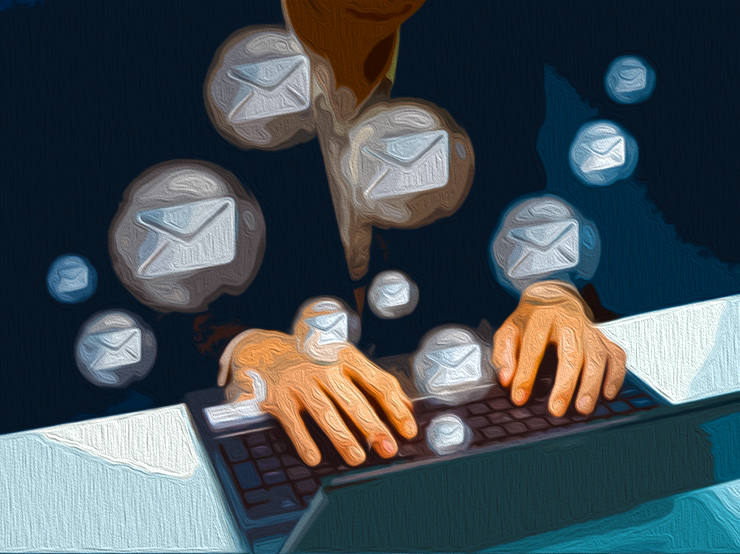
Hey there, are you intrigued by the whole idea of jumping into the world of social media outsourcing? Well, you're not alone! Nowadays, many forward-thinking tech company founders and startup CEOs are exploring the benefits of outsourcing content creation for blogs, social networks, and various digital platforms. Let's uncover the secrets behind social media content and see why outsourcing could be the game-changer your business needs.
Exploring the Magic of Social Media Content
Some companies swear by having a social media expert as a cornerstone of their marketing strategy. While social media might not eat up the biggest share of marketing budgets, studies reveal that it contributes to only 2% of all B2B website traffic and 7% of ecommerce. But here's the kicker – social media still wields the power to sway customer behavior and drive leads.
The Influence of Social Media Traffic
Even if you're a bit skeptical about the impact of social media and tend to shy away from sharing engaging content, overlooking its potential could mean missed opportunities. While social media might not directly pull in traffic, it significantly molds how customers perceive your brand. Picture this: with just 6,000 annual social visitors out of a million total visitors, these social visitors convert at a rate of 0.9% into leads, resulting in about 60 leads per year.
Unveiling the Reasons Behind Outsourcing Content Marketing and Social Media
Outsourcing your content marketing and social media endeavors can transform your ROI without draining your marketing budget solely on social platforms. Here are some key points to ponder:
- Outsourcing cuts costs versus hiring full-time writers or social media experts
- While social media may not flood you with traffic, it can shape the buyer's journey and generate leads if handled adeptly
- Outsourced services provide expertise akin to in-house professionals, encompassing strategy, content creation, and distribution
The Benefits of Outsourcing Social Media Efforts
1. Time and Cost Efficiency
Outsourcing blog writing and social media management can save you both time and money. Teaming up with external services often leads to significant cost reductions, potentially saving you up to 50% compared to hiring internal experts who could cost you around $70,000 annually.
2. Enhanced Productivity
Outsourcing empowers you to focus on productivity and results instead of micromanaging individual employees. By paying for tangible outcomes like blog posts or social media shares, you ensure streamlined efficiency and cost-effectiveness.

3. Access to Specialized Expertise
Outsourcing grants access to niche skills and knowledge, allowing you to concentrate on core business functions while experts handle content creation and social media strategies.
4. Scalability at Your Fingertips
Outsourcing enables you to expand your content marketing initiatives based on data-driven insights, resulting in increased traffic and leads for your business. Consistent content creation and distribution are crucial for attracting and retaining customers.
5. Leveraging Digital Marketing Tools
External agencies leverage advanced digital marketing tools like Semrush, Hootsuite, and Yoast to enhance content strategy and performance. These tools optimize content, measure results, and boost interactions on social media platforms.
Challenges of Outsourcing Social Media
While outsourcing brings numerous benefits, there are hurdles to overcome:
- Navigating the process of finding the right agency or professionals for outsourcing
- Ensuring seamless communication and alignment with external partners
- Establishing and maintaining quality standards while managing expectations
Mastering the Art of Effective Social Media Outsourcing
1. Choose a Strategic Partner Wisely
Opt for an agency skilled at crafting tailored social media strategies aligned with your business goals and target audience.
2. Foster Synergy
Ensure a seamless fit with the external agency in terms of culture, communication, and values to nurture a prosperous collaboration.
3. Prioritize Tracking Results
Collaborate with an agency that prioritizes result tracking and aligning strategies with tangible outcomes to drive success.
4. Embrace Industry Knowledge
Choose an agency well-versed in your industry or willing to invest time in understanding your specific business requirements, especially in specialized sectors like healthcare or finance.
5. Define Clear Goals and Content Strategy
Establish precise posting schedules, content formats, and platforms to engage your audience effectively and achieve your marketing objectives.
6. Develop a Collaborative Content Calendar
Create a structured content calendar that offers flexibility while ensuring consistent content delivery and alignment with SEO best practices.
7. Implement a Strong Measurement Strategy
Utilize metrics to track reach, engagement, and conversion rates, enabling data-driven decisions to optimize content performance and drive business growth.
Outsourcing social media and content creation could be the key to success for startups and businesses looking to enhance their marketing efforts and achieve results in a competitive digital landscape. Remember, the right partnership can take your business to new heights!

Frequently Asked Questions
What are 3 examples for internet marketing?
Internet Marketing encompasses various online activities to promote products and services. It includes email marketing, social media marketing, SEO, PPC advertising, web design, and more.
Email marketing involves sending emails to potential customers to inform them about your company and latest offers.
Social media marketing utilizes platforms like Facebook, Twitter, and LinkedIn to increase product/service awareness and engage with clients.
SEO focuses on improving website visibility in search engines by enhancing backlinks to boost traffic.
Website Design involves creating visually appealing and functional websites that meet technical standards.
PPC Advertising allows advertisers to bid on keywords related to their offerings and get paid per click on their ads.
Why is it important to define your brand?
Your brand is the promise you make to customers, distinguishing your company and building trust and credibility.
A strong brand reflects your company's culture, passion, and values, setting you apart in the market.
By defining your brand, you establish a clear identity and value proposition that resonates with your target audience.
Consider aspects like brand name, visual elements, and brand perception to create a compelling brand image.
What are the 5 best social media marketing strategies?
Social Media Marketing offers powerful ways to boost your business:
- Interact with customers via a Facebook Fan Page, sharing content and engaging with users.
- Utilize Twitter to share information, connect with audiences, and increase visibility using hashtags.
- Post engaging videos on YouTube to attract viewers and direct traffic to your site.
- Host live events to interact with potential clients and showcase your products/services.
- Respond to customer reviews promptly to build trust and encourage repeat purchases.
Statistics
- 81% of brands engage in affiliate marketing, with eCommerce sites being prime candidates.
- Affiliate marketing delivers CPCs 80% lower than average and CTRs 4-5 times higher than average.
- 60% of online shoppers globally actively seek coupons before making purchases.
- Currently, 81% of global brands have affiliate programs in place.
- In 2017, 34% of marketers found co-branding to be the most effective method to grow email subscribers.
Frequently Asked Questions
How much money should I budget for my first digital marketing campaign?
It depends on which campaign you are planning to launch. The money you spend on your first campaign can range between $50 and $100.
Advertisement space can be purchased for search engines such Google or Bing. These ads usually cost around $10 per click.
Banner advertisements can be placed on websites. This will allow you to attract new visitors and keep them coming back to your website.
You can also hire a freelancer to design some banners for you. The hourly rate for freelancers is typically between $20-30.
Once you have created your ad, it is possible to start tracking your results. You can find many free analytics software on the internet.
Data can also be tracked manually. To track information about your campaigns, keep a spreadsheet that records each metric (clicks, impressions and so on).
You can then determine whether your campaign was a success by collecting these data.
If that is the case, you can still try different methods to find one that works.
How to Make an Ecommerce Marketing Plan
First, you need to decide what products or services you want to market. This should include products or services that relate to your business. But, you must also offer enough variety for customers to be interested.
Next, determine how much you can spend on advertising, promotions and other marketing methods. You may need to use multiple methods, such as direct mail, email blasts, social media sites, search engine optimization, and more.
Once you determine how much money your business needs, you can develop a budget for each marketing method. Asking an expert in emarketing can help you determine which marketing method will work best for your business. They can help you choose the right method for your company.
Once you have a plan, you can start implementing it. To make this process easier, you can hire someone to do some or all of the work for you.
You don't need to reinvent the wheel by starting from scratch. Use proven strategies that have worked well for other online retailers. Make sure you test everything before you make any major changes.
It is important to remember that your ultimate goal in eCommerce marketing is to increase profits and sales. Your eCommerce marketing strategy should consider both long-term and short-term goals.
If you're looking for a way to boost your sales, read our article about eCommerce marketing tips. We hope they help you find success!
What is eCommerce marketing?
Ecommerce marketing is nothing but online shopping. It is the act or selling products over the internet. This includes buying goods from companies to sell them over the internet. This would include selling on eBay if you are an individual seller. You might also own a business where you sell products for profit. Selling items online is the key to making money.
Here are some more details regarding eCommerce marketing:
The first step in creating a successful eCommerce site is to identify the type of products that you are looking to sell. Next, decide whether to sell one product (such as a book), or multiple products (such books and DVDs).
Once you have a clear idea of what you are offering, it is time to look for a supplier. A supplier is a company that makes and sells the product you want to sell. If you wanted to start selling greeting card, you would first need to find suppliers that make and sell them.
Once you've identified a supplier to work with, you'll need a website created to show the products to buyers and make it easy for them to order. You can either use templates provided by suppliers or you have to create your own template. Once you have a website, you will need to market it. This could include publishing articles on blogs or forums, advertising on Google Adwords websites and sending emails relevant to contacts.
There are several different channels available when it comes to promoting your eCommerce business. These channels include email, social media, search engines, and mobile apps.
- Email marketing is a popular choice for many businesses. It's cost-effective and easy to implement. And it delivers results. However, generating quality leads requires a lot of effort and time.
- Search engine optimization (SEO), is a technique that improves a website's ranking for certain keywords. It's usually done through link building, which helps pages rank higher in search engines.
- For businesses, social networking sites like LinkedIn and Facebook are increasingly important. Many people use these sites every day to communicate with friends and family. By posting interesting articles, you can reach thousands more customers.
- Apps for mobile devices are a powerful tool for eCommerce marketers. People love to shop on their smartphones and tablets. An app makes it easy to reach customers from wherever you are.
eCommerce has grown to be a huge business. There are many avenues to promote your small business. Take your time to choose the right method for you to reap the benefits of eCommerce marketing.
What type of eCommerce Marketing Strategy should I follow?
There are three types to eCommerce marketing.
- Direct marketing
- Search Engine Optimization (SEO)
- Social Media Marketing
Direct marketing means sending emails directly at potential buyers. These emails could contain coupons, discounts, special offers, etc. This type of marketing is designed to build customer loyalty.
Search engine optimization is the process of improving your website's ranking in search engines such as Google, Yahoo!, and Bing. Your site will appear near the top results for keywords related to your product/service. This will increase your traffic.
Social media marketing is done using websites like Twitter, Facebook and Pinterest. You can connect with your target audience. It's free, easy to set up, and effective.
Each method has its own pros and cons. For example, SEO requires time and effort, while direct marketing doesn't require much effort. If you are only focused on one aspect of eCommerce marketing, you may not see the full benefit. Combining different marketing strategies is a good idea.
To promote your products, you can send emails and get high rankings in search engine results. You can also advertise via social media and link to your site through those pages.
As you can see, there are many ways to market your eCommerce store. Pick the best for you and make sure to implement them regularly. Best of luck!
How does marketing fit in with business strategy.
Marketing is an essential part of every business strategy. Marketing is essential to any business strategy. Without it, nobody would be able to know about your company. Marketing is not possible without sales. So marketing is essential to any business strategy.
However, marketing is not something everyone appreciates. Marketing is often thought to be about advertising campaigns. Marketing goes beyond that. Marketing encompasses everything you do to communicate your company's identity and position in the marketplace.
Think about how you want your customers to perceive you. How will my customers see me? How can I best present myself to the world
If you don't have the answers, marketing isn't something you've considered.
What are some examples of direct marketing?
Direct Marketing Examples include postcards, brochures, flyers, e-mails, etc.
Direct marketing allows people to reach you at their homes or wherever they happen to be. Direct marketing is the best method to communicate with customers who have chosen your product over another brand.
You must know what kind of message would appeal most to your target market.
Find out what your customer needs, then provide it.
There are many ways to use direct marketing to promote your business. For example, you could send catalogs to potential customers or advertise in local newspapers.
Another option is to create a unique mailing list of your existing customers. You can easily add subscribers to your existing customers list if there is a good database.
Ask current customers if their would like to receive promotional materials. Special offers may be offered by some companies to get discounts.
What is an example of search engine marketing?
Search Engine Marketing (SEM), one of the most important components of digital marketing, is essential. SEM covers paid search engine optimization (SEO), sponsored links, display advertisements, paid inclusion and social media marketing.
Statistics
- Meanwhile, a PartnerPath poll found that co-marketed ads help 68% of consumers arrive at a buying decision before even speaking to a salesperson. (influencermarketinghub.com)
- Many experts recommend you share 20% of your promotional content and 80% of other valuable content you find. (marketinginsidergroup.com)
- In 2017, 34% of marketers cited co-branding as the most effective way to increase the number of email subscribers. (influencermarketinghub.com)
- From 2020 to 2022, eMarketer predicts that digital marketing will grow by 36% and take up 54% of marketing budgets! (marketinginsidergroup.com)
- A poll earlier this year found that 14% of older Gen Z's had bought an item in the previous six months based on an influencer's recommendation. (influencermarketinghub.com)
External Links
neilpatel.com
influencermarketinghub.com
blog.hubspot.com
moz.com
- SEO Learning Center – Moz
- [Case Stud] How Moz Ranked #1 in Search Engine Optimization for a High-Volume Keyword In Under 3 Months
How To
Top 10 Affiliate Marketing Strategies for 2022
Affiliate marketing has become a very popular way for marketers to advertise online.
It allows companies without any upfront expenses to promote their products. Instead, affiliates pay a commission whenever users purchase the advertised items.
There are two main types: performance-based or cost-per sale. Performance-based means that an affiliate gets paid after a certain number of sales occur. Affiliates earn a fixed amount regardless of whether they sell anything.
In this article, we'll go over the top 10 affiliate marketing strategies for 2022. Each strategy will be discussed and examples of successful campaigns provided.
#1. 1. Create a brand loyalty program
Brand loyalty programs are becoming increasingly common among eCommerce sites. These loyalty programs enable customers to accumulate points for every visit to a website and each purchase.
These points may be used later to receive discounts, rewards, or special deals.
Amazon Prime is one example. It gives members access exclusive deals or perks.
Amazon also runs a referral program called Associates. Amazon offers a referral program that allows merchants and customers to refer others to Amazon.
#2. Promoting products using social media
Advertising products is easy on social media platforms such Instagram, Twitter, Pinterest, Instagram and Instagram.
Targeting potential buyers can be done by companies via ad networks. Facebook, for instance, allows advertisers the ability to target specific groups based on their demographics and interests.
They may also target those who live within walking distance to a store.
Twitter is another platform that allows companies reach targeted audiences quickly. Companies can share content, ask questions and send tweets.
Instagram is similar with Twitter in that it allows brands interact with consumers. Instagram does not allow businesses to send direct messages like Twitter.
Instead, followers will see posts automatically in their feeds.
Pinterest is another social network that allows businesses and customers to connect. These connections include sharing images, asking questions, or answering customer inquiries.
#3. Offer Special Discounts to Influencers
Influencer marketing is a powerful tool for growing brand awareness. Brands have the option to partner with influencers and offer them incentives to post promotional material about products.
This partnership may include giving influencers free products to try or review.
These partnerships do not only include product reviews. Influencers can also become brand ambassadors.
Brands can hire influencers to host giveaways, provide opinions, answer questions, or simply show off their products.
#4. 4. Create video ads
Video ads have become increasingly popular. Video ads have become increasingly popular since the advent of smartphones and tablets.
Advertisers can use video ads to capture attention and persuade viewers to click on links or buy products.
YouTube is one of the most significant websites where advertisers can place video ads. Advertisers can upload short clips up to 60 seconds on YouTube.
Google AdWords, another option, allows you to place video ads. Google uses keywords in order to match ad placements with relevant searches.
#5. Run Mobile Campaigns
Mobile apps are increasingly popular. Mobile apps allow users to download and play games, listen to music, read books, or watch movies.
People spend hours reading, playing games, listening to music, watching movies, and even watching TV.
Businesses should consider using mobile apps to drive traffic to their websites.
Apps can easily be downloaded onto smartphones, tablets, Android phones, iPhones and iPads.
App stores are available for Apple iOS, Google Play, Windows Phone, Blackberry OS, and Kindle Fire.
#6. #6.
The best way to sell physical goods is through shopping carts.
Customers can add items to their cart, then checkout to complete purchases.
Online shopping carts continue to gain popularity. Customers can register and view product listings at some online retailers like eBay.
Other online retailers, such as Amazon, integrate shopping carts into their websites. Customers can order the items they desire and make payment right away.
#7. #7.
Product lines are a great way to attract new customers.
It is common for companies to send out press releases informing the public about the new products they have launched.
This release could include information about the new line's pricing and availability.
Once the launch is completed, the company can market the product.
#8. Develop Cross-Channel Marketing Programs
Cross-channel marketing refers to marketing efforts across different channels.
For example, cross-channel marketing could involve sending emails to subscribers via email lists, promoting products on social networks, and running banner advertisements on search engines.
Some companies combine multiple channels to increase exposure.
Some companies also sell products in brick and mortar stores. Additionally, they sell their products online.
Some companies may use both channels simultaneously in an effort to increase sales.
#9. #9.
Data analytics allows companies to optimize their business operations, and maximize profits. Data analytics involves the analysis of data collected from multiple sources in order to discover patterns and trends.
Analytics can identify problems, evaluate current practices, predict future needs, and suggest improvements.
Analytics tools are able to gather data from many sources, such as web servers and databases.
These tools can help companies learn about their customers, and to better understand their behavior.
#10. #10.
Every business must be customer-oriented. Satisfied customers are more likely to return for more services.
A satisfied customer is also more likely to recommend your products to others.
Satisfied customers are less likely to complain of poor service.
Businesses must increase customer satisfaction.
You can do this by offering exceptional customer support.
Make sure employees respond to customer queries promptly and resolve issues effectively.
Fast shipping options are available so that customers don't have too much time before they receive their orders.
Also, make sure your website is easy to navigate.
Your site should load quickly.
It is important to remember that not every customer is created equal.
Customers may require additional assistance, while some customers won't need much.
Therefore, it is important to tailor customer support policies to individual needs.
Doing this ensures that everyone receives excellent service.
For more information on how to launch an affiliate campaign, see our guide.
We've provided everything you need about how to start an affiliate marketing campaign.
You now know how to create an affiliate marketing campaign that works. Now you can start building relationships with bloggers and publishers.
You'll gain valuable experience and credibility by doing so.
You can then leverage this expertise to earn
————————————————————————————————————————————–
By: 5675
Title: The Ultimate Guide to Elevating Your Business with Outsourced Social Media Content Creation
Sourced From: internetlib.org/the-ultimate-guide-to-boosting-your-business-with-outsourced-social-media-content-creation/
Published Date: 11/26/2025 8:00:09 PM