
Running a successful business requires effective customer service and organized sales calls. Investing in the best call center software can equip your teams with the necessary tools to communicate efficiently. The good news is, it doesn't have to break the bank as long as you have a reliable internet connection.
Modern Solutions for Seamless Communication
Gone are the days of needing physical office space or a traditional landline for call center operations. Modern call center software enables you to set up your employees to work from anywhere, eliminating the need for a centralized office.
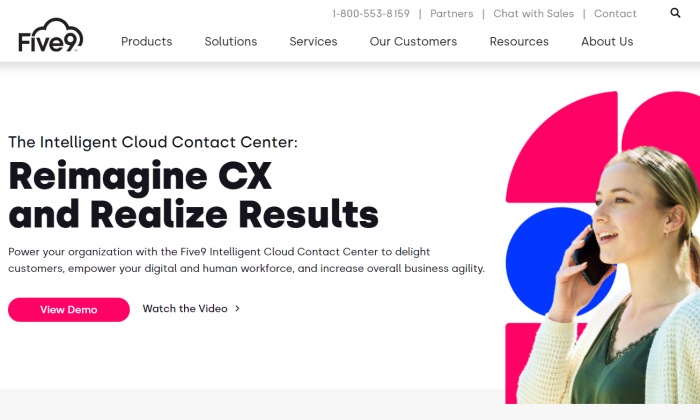
#1 – Five9 — Enhancing Customer Reach
Five9 stands out for its ability to centralize all communication channels in a single interface. Particularly beneficial for sales teams, Five9 allows agents to engage with leads across various platforms, from social media to email inquiries, all from one platform.
Advanced Sales Features
Five9 offers features like auto dialer, Do Not Call list management, and web callbacks, enhancing sales team productivity. Skills-based routing ensures that calls are directed to the most suitable agents, improving customer service.
#2 – Aircall — Affordable and Efficient
Aircall provides a cost-effective solution without compromising on essential features. With a user-friendly interface and seamless integrations with popular business apps, Aircall simplifies call management for agents.
Efficient Call Handling
Aircall enables warm transfers, call tagging, and real-time metrics, empowering agents to provide top-notch service. The platform's power dialer streamlines outbound calls, saving time and increasing productivity.

#3 – 8×8 Contact Center — Ideal for Large Customer Service Operations
8×8 Contact Center offers robust tools tailored for large customer service call centers. With comprehensive features like intelligent IVR, speech analytics, and skills-based routing, 8×8 enhances agent performance and customer satisfaction.
Comprehensive Support and Integration
8×8 Contact Center integrates seamlessly with leading CRMs and offers support for multiple channels, including voice, social media, and email. The platform's competitive pricing and advanced features make it a standout choice for large organizations.
#4 – Dialpad — Cloud Migration Made Easy
Dialpad facilitates the transition to a cloud-based call center while supporting traditional phone systems. With features like voice intelligence, call routing, and real-time reports, Dialpad offers a secure and efficient solution for modern call centers.
Seamless Connectivity and Integration
Dialpad's integrations with popular business tools like Salesforce and Zendesk enhance workflow efficiency. The platform's voice intelligence capabilities and flexible pricing make it a valuable asset for businesses looking to modernize their call center operations.
#5 – Talkdesk CX Cloud — Empowering Self-Service
Talkdesk CX stands out for its emphasis on empowering customers through self-service options like interactive voice response (IVR). By enabling customers to find information independently, Talkdesk enhances agent productivity and customer experience.
Enhanced Customer Engagement
With features like AI agent assistance, intelligent call routing, and speech analytics, Talkdesk CX offers a comprehensive solution for modern call centers. The platform's focus on customer self-service and seamless integrations make it a top choice for businesses prioritizing customer satisfaction.

Investing in the right call center software is crucial for enhancing customer interactions and streamlining operations. Consider the unique features and benefits of each platform to choose the one that best aligns with your business needs and goals.
Frequently Asked Questions
What is eCommerce Marketing?
Ecommerce marketing is simply online shopping. It is the act or selling products over the internet. This can include buying products from companies and then selling them online. If you are an individual seller, selling on eBay is possible. It is possible to also start a business and sell goods for profit. The key point here is to make money by selling items online.
Here are more details on eCommerce marketing
The first step in creating a successful eCommerce site is to identify the type of products that you are looking to sell. Next, decide whether to sell one product (such as a book), or multiple products (such books and DVDs).
Once you know the product you offer, you will need to find a supplier. A supplier is a company which makes or sells the product that you are looking to sell. A supplier is a company that manufactures and sells the product you are looking to sell.
Once you have found a supplier, you need to make a website that will display the products for buyers. Some suppliers offer templates that you can use, while others require you create your template. After you have your website built, it's time to market it. This could include publishing articles on blogs or forums, advertising on Google Adwords websites and sending emails relevant to contacts.
When it comes to marketing your eCommerce company, there are many channels. These include email and search engines as well as social networks and mobile apps.
- Email marketing can be a good option for most businesses. It's cost-effective and easy to implement. And it delivers results. But, it takes a lot of time and effort to generate quality leads.
- Search engine optimization (SEO) is a technique used to improve the ranking of a webpage for specific keywords. This is often done via link building, which allows pages to rank higher in search engine results.
- LinkedIn and Facebook are important for business promotion. These social networking sites are used daily by millions of people to communicate with their families and friends. You can get exposure to thousands of new customers if you post interesting articles there.
- Apps for mobile devices are a powerful tool for eCommerce marketers. Shoppers love to use their tablets and smartphones to shop. A mobile app lets you reach customers no matter where they are.
In summary, eCommerce has become a big business. There are many ways you can promote your business. Be wise when choosing an eCommerce marketing strategy to maximize your business's potential.
These are 3 examples internet marketing.
Internet Marketing can be described as a broad term that covers online activities to promote products and/or services. Internet marketing covers email marketing as well social media marketing, search engine optimiz (SEO), PPC advertising (PPC), web design and other related activities.
These terms don't necessarily mean that you have to spend money in order to make money. There are many ways you can generate income without spending any money. But, the higher your return, the more you will invest in each option.
Email marketing is perhaps the most well-known form of online marketing. This involves sending out emails to potential customers, informing them about your business and its latest offers.
Another popular way to market is via social media. Social media sites such as Facebook, Twitter, and LinkedIn enable users to share information and interact with friends and family. These sites also provide businesses with an excellent opportunity to connect with their clients and increase awareness of their products or services.
Search Engine Optimization is a technique for increasing the visibility and popularity of websites on major search engines. By improving the quality and quantity of relevant backlinks, webmasters can boost traffic to their sites.
Website Design is the art or creating a website that looks good and works well. Website designers are responsible for creating the design and layout of websites. Website designers also ensure that the website meets accessibility standards and complies with technical specifications.
Advertising known as Pay Per Click (PPC), is where advertisers place bids on keywords that relate to their products or services. Advertisers are paid for each click on their ads. PPC ads usually appear at the top or bottom of search results pages.
What budget should I set aside for my first campaign in digital marketing?
It all depends upon the type of campaign that you intend to launch. You can spend $50 to $100 on your first campaign.
You can purchase advertising space on search engines like Google and Bing to get started. These ads typically cost $10 per click.
Banner ads can be placed anywhere on your website that you own. This will attract new visitors to your site and help them return.
You can also find a freelancer that will design your banners. Freelancers are typically paid between $20 and $30 an hour.
Once you have created your first ad, you can begin tracking results. There are many analytics tools available for free on the Internet.
You can also track data manually. To collect information about your campaigns, you can keep a spreadsheet where you record each metric (such as clicks, impressions, etc.)
After collecting this data, you can determine whether your campaign was successful.
You can also try different methods until one works.
What are the 4 types of marketing?
Marketing is broken down into four main categories: Direct Mail Marketing and Traditional Advertising. Public Relations is also included. Digital Marketing falls under the umbrella of digital marketing. Each type of marketing has different purposes and should be used for a specific purpose. This way, you can use them together to reach your goals.
What eCommerce Marketing Strategy Should I Use?
There are three main types eCommerce marketing:
- Direct marketing
- Search Engine Optimization, (SEO)
- Social Media Marketing
Direct marketing is sending emails directly to buyers. These emails could contain coupons, discounts, special offers, etc. This type of marketing aims to build customer loyalty and trust.
Search engine optimization involves improving the ranking of your site in search engines like Google and Yahoo. More people will find your site if it appears near the top when they search for keywords that are related to your product or services.
Social media marketing is done using websites like Twitter, Facebook and Pinterest. Connect with your audience. It's simple to set it up, free and very effective.
Each of these methods has its pros and cons. For example, SEO requires time and effort, while direct marketing doesn't require much effort. But if you concentrate on just one type of marketing, you will not reap the full benefits from eCommerce marketing. We encourage you to combine multiple marketing channels.
For instance, you could send emails promoting your products and rank highly in search engine results. You could also advertise on social media, and then link back to your website from these pages.
There are many marketing options for your eCommerce store. Select the best options for your company and keep them in place over time. Good luck!
Are there risks involved in digital marketing
Yes, digital advertising is fraught with dangers.
For starters, you must ensure you protect your online reputation by being careful about what you say on social networks.
Also, you must ensure that all of your content is original and does not infringe on anyone else's intellectual property rights.
In addition, you risk losing control of your brand image if you do not monitor your online presence closely.
Last but not least, identity theft may occur if someone uses your personal details without you being present.
How to Protect your Online Reputation
- Take Care of What You Share on Social Networks
- Ensure all Content Is Original and Doesn’t Infringe On Any Other Person’s Intellectual Property Rights
- Monitor Brand Image
- Use strong passwords
- Don't share personal details without authorisation
- Report Unauthorized Activities Immediately
- Don't Post Photos Of Yourself Or Others In A Disturbing Way
- Never Give Out Your Social Security Number
- Keep up with the latest news
- Stay Away From Scams
- Secure Password
- Always keep an eye out for new updates
- Do not share too much information
- You should be vigilant when giving out credit card numbers
- Do not send money through E-mail
- Check For Fake Websites
- Bad reviews can be a big problem for your business
- You should regularly check your credit reports
- You Need to Keep an Eye on Your Privacy Settings
- Ask Someone Who Knows You Well Before Sharing Something
Why is it so important to define your brand?
Your company's promise to customers is a brand. A brand can promise certain characteristics and benefits that make your business stand out from its competitors. Your brand is the thing that makes you different from other companies within your industry.
A brand can give you authority and credibility. Potential customers instantly recognize your company's logo when they see it. Because you have earned their trust, they will trust you.
Your company's culture can also reflect your brand. If your employees feel passionate about your brand, it probably reflects your passion for your product or service.
Your brand is more that words and photos. It's a promise that you company will keep. It's a promise to provide value to your customers.
When you set out to develop your brand, you need to consider several factors. First, you want to choose a name that clearly describes what your company does. You might choose Sweet Dreams Bakery if your bakery is your business. If you run a software business, however, you would probably choose DreamSpark Software.
Next, you will need to decide how your company will be represented. Will you use a recognized symbol? Are you going to use corporate colors? Are you going to use logos?
Finally, you'll want to consider how your target audience perceives your brand. Will you portray yourself as friendly and helpful? Will you appear professional and trustworthy? Do you appear knowledgeable and experienced?
These are all questions to ask before you build your brand.
Statistics
- A poll earlier this year found that 14% of older Gen Z's had bought an item in the previous six months based on an influencer's recommendation. (influencermarketinghub.com)
- From 2020 to 2022, eMarketer predicts that digital marketing will grow by 36% and take up 54% of marketing budgets! (marketinginsidergroup.com)
- 81% of brands employ affiliate marketing, and eCommerce sites are particularly good candidates. (blog.hubspot.com)
- This allows us to deliver CPCs that are 80% less than average and CTRs 4-5 times higher than average. (marketinginsidergroup.com)
- Companies that use personalization are seeing revenue increases ranging from 6-10%. (blog.hubspot.com)
External Links
neilpatel.com
youtube.com
blog.hubspot.com
moz.com
- SEO Learning Center – Moz
- [Case Studies] How Moz ranked #1 for a high-volume Keyword in 3 Months or Less
How To
Six types of Ecommerce Marketing
How can I market and sell my eCommerce store?
Ecommerce marketing represents one of most difficult marketing tasks. It requires that you understand your customers and their buying processes. You also need to understand how your products and service interact with them. This information will allow you to create an effective strategy to reach your goals.
There are six kinds of eCommerce marketing strategies.
- Product Strategy – The first step is determining what kind of product you want to sell online. There are three main categories: physical goods (things), digital goods (services), and membership sites. Once you've decided which category you're going to work with, you'll need to decide whether to offer wholesale or retail prices. Wholesale pricing allows you to set the price for your products. While retail pricing charges customers directly for your products.
- Pricing Strategy: Next, decide how much you want to earn from selling products. Profit margins, competition, shipping and taxes are all factors to consider. Two ways to increase profits are possible when pricing your strategy: reduce your cost per sales and/or increase the volume of your sales.
- Promotion Strategy – Now comes the fun! Your business needs a promotion plan that is most effective. Some ideas include offering free shipping, special discounts, exclusive deals, and coupons. If you don't have any promotional ideas yet, try brainstorming some new ones.
- Shipping Strategy – Once you have figured out how to market your products, it is time to consider how you will get them to customers. Are you shipping via USPS, FedEx or UPS? Do you intend to use a fulfillment facility or do all the work yourself?
- Merchandise Management System. This software allows you to track inventory, fulfill orders, track orders, and communicate effectively with suppliers. You have the option to choose from many systems, depending on your preferences and budget.
- Customer Service Strategy. Finally, you will need to devise a customer services strategy that is both effective and profitable for your business. What support options are available? Will they be via email or phone? Are customers able to contact you via chat, email, social media, and even postal mail?
————————————————————————————————————————————–
By: 3008
Title: Best Call Center Software
Sourced From: internetlib.org/best-call-center-software/
Published Date: 7/19/2021 4:37:19 PM