
When it comes to creating a standout blog, choosing the right WordPress theme is crucial. With WordPress being the top platform for bloggers, selecting the perfect theme can make all the difference in how your blog is perceived by visitors and how easily they can navigate it.
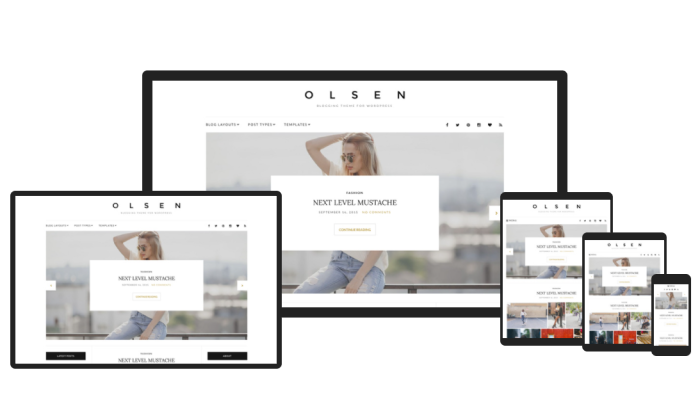
Olsen Review – Ideal for Lifestyle and Fashion Blogs
Olsen is the go-to theme for lifestyle and fashion bloggers who want a clean layout with crisp fonts to showcase their content. It offers a familiar yet professional design that ensures readers can easily navigate and engage with your blog. Olsen's customizable features allow you to highlight your best work effortlessly.
Extra Review – Versatile Theme for Most Standard Blogs
Extra is a top recommendation for bloggers who want a theme that offers versatility without limitations. Whether you run a digital magazine, portfolio, or online store, Extra provides the tools to create a unique blogging experience. With its intuitive design modules, creating engaging posts and pages is a breeze.
Newspaper Review – Best for Breaking Stories
Newspaper is the ultimate theme for bloggers who publish daily content and need a platform that can handle breaking stories effectively. With its user-friendly interface and seamless integration with Google AMP, Newspaper ensures a smooth reading experience for all visitors, especially those on mobile devices.
Akea Review – Perfect for Minimalist Style
Akea is the ideal theme for bloggers who appreciate minimalist design and want to focus on clean, uncluttered layouts. With Akea, you have complete control over how your content is presented, allowing you to create a blog that reflects your unique style. Its customizable features make it easy to tailor the theme to your preferences.
Pearl Review – Top Corporate WordPress Theme
Pearl is a feature-rich theme designed for businesses looking to elevate their online presence. While it may be more than what a standard blog needs, Pearl offers a wide range of options to customize your blog and align it with your brand and industry requirements. It's a comprehensive theme that ensures your blog is seamlessly integrated into your larger website.

TinySalt Review – Ideal for Food Blogs
TinySalt is the perfect theme for food bloggers who want to showcase their recipes and create a visually appealing blog. With its specialized features for displaying recipes, such as recipe videos and filters, TinySalt makes it easy to engage readers and provide them with an enjoyable browsing experience.
ConsultingWP Review – Best for Business Promotion
ConsultingWP is a powerful theme for businesses looking to make a statement with their blog. Whether you offer services or want to enhance your brand's visibility, ConsultingWP provides the tools to create a professional and engaging blog. Its business-focused features, such as the Cost Calculator Builder, make it easy to showcase your offerings and interact with potential clients.
Choosing the right WordPress theme for your blog depends on your niche, customization needs, and desired features. Each of these top themes offers unique benefits tailored to specific blogging requirements, ensuring that you can create a successful and engaging blog that resonates with your audience.
For more insights on optimizing your blog for search engine rankings, check out Neil Patel's guide on effective blogging strategies. Happy blogging!
Frequently Asked Questions
Social Media Marketing can be a great way for your business to get noticed online. It is a great tool to increase brand awareness, generate leads, and sell products. Here are five social media marketing strategies to help your business grow.
- Make a Facebook fan page – This will allow you to interact directly on Facebook with your customers. Upload photos, videos, as well as other files.
- Twitter – Promote your business on Twitter – Twitter is another great platform to connect with people and share information. Use hashtags to increase visibility.
- Upload videos to YouTube – People love watching videos. If people like what they see, they may click on your website.
- Host Live Events – Having live events allows you to meet face-to-face with potential clients. They can ask any questions about your services and products.
- React to Customer Review – Positive reviews will build trust between you and your clients, which in turn will encourage repeat purchases. Negative comments should be addressed quickly.
What makes it so important to identify your brand?
A brand is simply the promise your company makes to its clients. A brand promises certain qualities and benefits that make your company stand out among competitors. Your brand is the thing that makes you different from other companies within your industry.
A brand gives you credibility and authority. Potential customers instantly recognize your company's logo when they see it. They trust your company because you have earned their respect.
Your company's culture can also reflect your brand. If your employees feel passionate about your brand, it probably reflects your passion for your product or service.
Your brand is more than just words and pictures. It's a promise that your company lives up to. It is a promise to deliver value to customers.
You should take into consideration several aspects when creating your brand. First, you want to choose a name that clearly describes what your company does. You might choose Sweet Dreams Bakery if your bakery is your business. You'd choose DreamSpark Software if you were running a software firm.
Next, think about how your brand will look. Will your logo be easily identifiable? Are you going to use corporate colors? Will you use logos
You should also consider how your target audience views your brand. Will you portray yourself as friendly and helpful? Will you appear professional and trustworthy? Will you be able to demonstrate your expertise and knowledge?
These are all important questions you should ask before building your brand.
What are the 7 steps to an internet marketing strategy?
Internet marketing strategies are used to achieve business goals through online media. The seven basic steps include planning, research, implementation, monitoring, analysis, optimization, and evaluation. Each step should be repeated regularly to ensure effective internet marketing.
- Planning – This is the step that involves identifying your target market and creating a plan on how to reach them. Consider who might purchase your product/service.
- You can use research to understand the needs and interests of your customers so that you can choose the products or services that best meet their needs. It also gives you valuable insights into popular trends and consumer behavior.
- The first step in implementing your campaign is to select a platform (e.g. Facebook), and then determine where to place your ads. Once you've selected the platform(s), make sure they're properly configured. You can also decide whether you want to spend money or pay per click.
- Monitoring – Monitoring lets you see how your efforts are performing. Google Analytics Analytics allows you to track traffic flows, conversions rates, and customer demographics.
- You can compare the results to benchmarks and other performance levels. If you find areas underperforming, this step guides how to improve.
- Optimization – Making changes to your website in order to attract more visitors is called optimization. You might add new features, or alter the way users navigate to your site.
- Evaluation – Evaluate your campaign's performance to see where it is at the moment. Do you see any areas for improvement? If not, then you may have reached your goal. However, if there are still issues that need addressing, then you'll need to evaluate again.
What are 3 examples of internet marketing?
Internet Marketing can be described as a broad term that covers online activities to promote products and/or services. Internet marketing encompasses email marketing, social networking, search engine optimization, pay-per click advertising (PPC), website design, and pay-per view.
It is important to understand that these terms don't necessarily imply that you need to spend cash to make money. There are many methods to generate income, and you don't have to spend any cash. The better the return on your investment in each method, however, is the greater the potential for income.
Email marketing is the most popular form of internet marketing. This involves sending out emails to potential customers, informing them about your business and its latest offers.
Another popular way of advertising is through Social Media Marketing. Social media sites such as Facebook, Twitter, and LinkedIn enable users to share information and interact with friends and family. These sites provide businesses an excellent way to communicate with their clients, increase awareness and build trust in their products or service.
Search Engine Optimization (SEO), is a technique that improves the visibility of websites in major search engines. Webmasters have the ability to increase traffic to their sites by improving the quality or quantity of relevant backlinks.
Website Design is the art or creating a website that looks good and works well. A website designer creates the layout and style of a website. Website designers also make sure the website conforms to technical specifications and meets accessibility standards.
Advertising via Pay Per Click (PPC), where advertisers bid for keywords relevant to their products. Advertisers earn a commission when someone clicks their ad. PPC ads appear on search results pages at the top or bottom.
Which are the four types marketing?
Marketing is divided into four categories: Traditional Advertising, Direct Mail, Public Relations, and Digital Marketing. Each of these categories has different goals and should only be used for specific purposes. You can combine them to achieve your goals.
What is the difference in marketing and advertising?
Advertising is communication that promotes brands or products. Advertising has a clear call of action. For example, “Buy now!” Or “Click Here.”
Marketing, on the other hand is a way to communicate your company's vision, mission, and values with potential customers. Marketing can also help build relationships between current and potential customers.
Marketing can be used, for instance, to tell the story about your company and what you offer. You might talk about your background, philosophy, or commitment to quality. Perhaps you could give testimonials from happy customers. Perhaps you can even hold an event where people are encouraged to visit your website by giving away free shoes.
Marketing is simply telling stories. Advertising is all about selling products.
Statistics
- From 2020 to 2022, eMarketer predicts that digital marketing will grow by 36% and take up 54% of marketing budgets! (marketinginsidergroup.com)
- In 2017, 34% of marketers cited co-branding as the most effective way to increase the number of email subscribers. (influencermarketinghub.com)
- According to statistics, 60% of online shoppers worldwide actively search for coupons before purchasing from a virtual shop. (influencermarketinghub.com)
- Meanwhile, a PartnerPath poll found that co-marketed ads help 68% of consumers arrive at a buying decision before even speaking to a salesperson. (influencermarketinghub.com)
- 81% of brands employ affiliate marketing, and eCommerce sites are particularly good candidates. (blog.hubspot.com)
External Links
statista.com
moz.com
- SEO Learning Center Moz
- [Case Study] How Moz Ranked #1 for High-Volume Keywords in Less Than 3 Months – Moz
neilpatel.com
blog.hubspot.com
How To
How can I find out if my brand efforts are successful?
Asking customers directly is the best method to measure your success. Ask your customers what they think of your brand. What do they most like about your company. What are their biggest complaints? What can they do better?
You can also use social media to conduct surveys like on Facebook or Twitter. You can simply ask your followers how they rate your brand. Next, analyze the results to find out which aspects of your brand have been most successful.
Review sites are another option. Customers love to share their experiences with businesses, whether they are happy or dissatisfied. To understand what people think of your brand, take a look at these comments.
Here are some suggestions to help improve your brand.
- Be consistent. Your marketing materials shouldn't be changed every time you launch a new product. You should keep your message consistent across all channels.
- Use multiple channels. Promote your brand using multiple channels, including email, websites, social networks, and other forms digital communication.
- Make sure you're giving your customers what they want. You should offer free shipping. If you do not deliver, your customers will be disappointed.
- Remember, your brand is much more than a logo. Your brand represents everything you have to offer. You should take the time and create a comprehensive image.
- Ask your customers for feedback. The sooner you get feedback from your customers, the better.
- Test different messages. You might find that one message is more effective than the others. Or perhaps you have two similar messages and one gets more attention than the other. Whatever the reason, it's important to track your stats to see which message performs best.
- Look for ways to improve your brand. Do you think there are areas that could use improvement? Perhaps your website could use more videos. Or maybe you could include more customer testimonials in your blog posts.
- You need to create a plan. Once you have decided on your goals, you will need to plan how you are going to achieve them. This includes setting a timeline for each objective. This also includes setting up milestones that will help you track your progress.
- Measure your results. When you reach your goal stop measuring. Instead, create a system that will track your progress over time. It will be easy to track your progress towards your goal.
- Repeat! Now that you've established a solid foundation for your brand, you'll want to continue to build upon it. If you have difficulty keeping up your current marketing efforts, you might consider hiring someone else.
- Stay positive. Negative feedback is something you should never ignore, but you shouldn't dwell too much on it. Instead, you should focus on how this information can be used to improve your brand.
- Use technology to your advantage. Technology has given us many tools we didn't even dream of before. You can use these tools to your advantage. You could, for example, create a mobile application for your brand.
- Try thinking outside the box. Try something different. You should think about what you are doing before you do.
- Have fun. Marketing is not supposed to be stressful. Marketing is often called “fun marketing”. It's important to enjoy your work.
- Know when to quit. If you feel that you have done everything possible, it is okay to quit. But don't give up too early. Sometimes you have to stick with it until you achieve the desired outcome.
- You must not forget about consistency. Consistency and consistency are key to success. Make sure you have a plan in place for your brand.
- Be patient. Building a successful brand takes patience. It won't happen overnight.
- Keep learning. Marketing is constantly evolving. Stay informed by attending webinars or reading blogs.
- Never stop learning. You can still learn from others even after you have achieved your goal.
- Enjoy the journey. Marketing is fun. Marketing is not a chore.
————————————————————————————————————————————–
By: 2985
Title: Top WordPress Themes for Successful Blogging
Sourced From: internetlib.org/best-wordpress-themes-for-blogs/
Published Date: 7/17/2021 4:35:17 PM