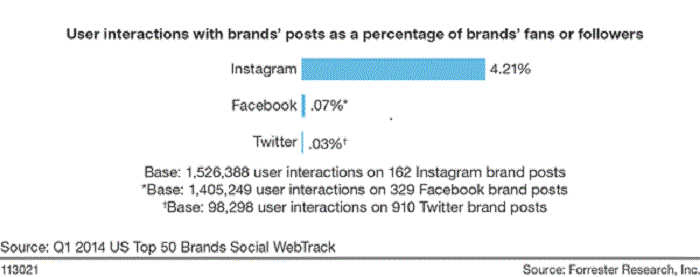

Many new e-commerce brands face the challenge of building a presence on Instagram when starting with no followers. While it may seem daunting, there are effective strategies you can implement to grow your brand even without an existing audience base.
The Power of Instagram as an E-commerce Tool
Instagram has become a vital platform for businesses, with 81% of people using it to discover and research products and services. Leveraging Instagram's visual nature can help you reach a broader audience and stand out from the competition.
Visual content on Instagram, such as product photos and demo videos, can boost engagement and drive sales. Compared to other social media platforms, Instagram offers higher brand engagement rates, making it a valuable tool for e-commerce businesses.
Strategies to Grow Your E-commerce Brand on Instagram
Here are ten actionable strategies to kickstart your Instagram growth journey:
Engage With Comments and Review Feedback
Responding to comments and engaging with users can significantly impact your follower count and revenue. By actively interacting with your audience, you can build a loyal customer base and improve brand perception.
Research Competitors
Examining your competitors' strategies can provide valuable insights into effective tactics and audience targeting. Analyze your competitors' Instagram profiles to identify opportunities to attract their followers to your page.

Host Giveaways in Exchange for Engagement
Giveaways are a popular way to drive user engagement on Instagram. By offering products or services as prizes, you can incentivize users to interact with your brand and attract new followers.
Post User-Generated Content (UGC)
Sharing user-generated content can enhance your brand's credibility and authenticity. Encourage customers to create content related to your products and services, and feature their posts on your Instagram page.
Customize and Optimize Your Shop
Creating a visually appealing and user-friendly storefront on Instagram is essential for maximizing sales. Incorporate promotional offers, shoppable links, and clear product descriptions to enhance the shopping experience for your followers.
Create a Branded Hashtag
Establishing a branded hashtag can help you track user-generated content and encourage followers to engage with your brand. Promote your hashtag across your Instagram profile and encourage users to incorporate it into their posts.
Prioritize Customer Experience
Enhancing the customer experience on Instagram can lead to increased sales and brand loyalty. Focus on providing a seamless shopping experience, responding promptly to inquiries, and making your products easily accessible to users.
Partner With Influencers in Your Niche
Collaborating with influencers can expand your brand's reach and credibility on Instagram. Identify influencers in your industry and establish partnerships to promote your products to their followers.

Use Product Tags
Utilize product tags to streamline the purchasing process for Instagram users. By tagging products in your posts, you make it easier for followers to discover and buy items directly from your Instagram page.
Create Product Collections
Take advantage of Instagram's product collections feature to showcase related items and facilitate browsing for your followers. By curating product collections, you can encourage users to explore more of your offerings.
Building a successful e-commerce brand on Instagram requires dedication, creativity, and a strategic approach. By implementing these strategies and staying engaged with your audience, you can establish a strong presence on Instagram and drive business growth.
Frequently Asked Questions
What are the 7 Steps of Internet Marketing Strategy?
Internet marketing strategies help businesses achieve their goals through online media. The seven basic steps include planning, research, implementation, monitoring, analysis, optimization, and evaluation. Each step is crucial for internet marketing success and should be done regularly.
- Planning – This involves identifying your target audience, and creating a plan to reach them. You'll also consider what product or service you offer and who might buy it.
- Research helps you understand your customer's needs and interests, so you can determine which products or services best match their expectations. Research also provides valuable insights into trends and consumer behavior.
- The first step in implementing your campaign is to select a platform (e.g. Facebook), and then determine where to place your ads. Once you've selected the platform(s), make sure they're properly configured. Also, consider whether to pay per Click or spend money advertising.
- Monitoring – This allows you to monitor your efforts and determine if they are succeeding. Google Analytics Analytics can be used to track traffic flow, conversion rates and customer demographics.
- You can compare the results to benchmarks and other performance levels. If you find areas underperforming, this step guides how to improve.
- Optimization – Optimizing your site means making changes to increase its efficiency in attracting visitors. You can add new features or alter how users navigate through your site.
- Evaluation – Evaluating your progress lets you see how well your campaign performs. Is there room for improvement? If not, you may not have reached your goals. However, if there are still issues that need addressing, then you'll need to evaluate again.
What is the role of marketing in a business strategy?
Marketing is an essential part to any business strategy. Marketing is key to every business strategy. And without sales, marketing wouldn't matter. Therefore, marketing is crucial to any business strategy.
However, marketing is not something everyone appreciates. Many people think that marketing is only about spending money on advertising campaigns. Marketing goes far beyond advertising campaigns. Marketing includes everything you do in order to communicate the company's identity, position and value in the marketplace.
When you think about your business, ask these questions: What image am I trying convey? How will my customers view me? How can I best present myself to the world
If you don't have the answers, marketing isn't something you've considered.
What are 3 examples of internet marketing?
Internet Marketing is a term that encompasses online activities intended to promote products, services, and other related topics. Internet marketing includes email marketing and social media marketing. It also includes search engine optimization (SEO), paid-per-click advertising, PPC, and website design.
These terms don't necessarily mean that you have to spend money in order to make money. There are many other ways to earn income that don't require you to spend any money. The return on each investment will be greater if you make more.
Email marketing is the most widely used form of internet advertising. This involves sending out emails containing information about your business to potential customers.
Another popular way to market is via social media. Social media sites such as Facebook, Twitter, and LinkedIn enable users to share information and interact with friends and family. These sites also provide businesses with an excellent opportunity to connect with their clients and increase awareness of their products or services.
Search Engine Optimization is a technique for increasing the visibility and popularity of websites on major search engines. By improving the quality and quantity of relevant backlinks, webmasters can boost traffic to their sites.
Website Design is the art of designing a website that looks attractive and functions well. A website designer creates the layout and style of a website. Website designers ensure that websites meet accessibility standards and comply with technical specifications.
Advertising called Pay Per Click (PPC) allows advertisers to bid on keywords relevant their products and/or services. Advertisers pay when someone clicks on their ad. PPC ads usually appear at the top or bottom of search results pages.
What are the main types?
Marketing is the act of communicating ideas, values, and messages to consumers. It is common to hear “marketing” interchangeably used with advertising. Marketing goes beyond advertising. Marketing includes all forms of communication that promote and market a product or service.
Marketing is made up of three components: promotion, branding, and distribution. Branding is the way a company presents itself to its target audiences. Promotion refers to attracting attention for your brand through paid advertising, promotions and other public relations activities. Distribution is how your message gets to your audience. This can be done by traditional methods, such as radio, print and email. However, modern technologies make it more accessible.
What is an example of search engine marketing?
Search Engine Marketing is a key component of digital marketing. SEM includes pay-per-click advertising, sponsored links, display ads, paid inclusion, search engine optimization (SEO), social media marketing, video marketing, mobile advertising, etc.
Social Media Marketing is a great way to promote your business online. It is a great tool to increase brand awareness, generate leads, and sell products. Here are five social media marketing strategies to help your business grow.
- Create a Facebook Fan Page – This allows you to interact directly with customers on Facebook. You can also upload files such as photos and videos.
- Twitter Promotes Your Business – Twitter can be used to promote your business and connect with others. Increase visibility by using hashtags
- Post videos on YouTube – Many people love to watch them. If they like what you have to offer, they might click through to your site.
- Host Live Events- Hosting live events gives you the opportunity to meet potential clients face-to-face. They will be able to ask questions about the products and services you offer.
- Respond to Customer reviews – Positive customer reviews increase trust and promote repeat purchases. Negative comments should be addressed quickly.
What are the five marketing concepts?
The following five marketing concepts can be used:
- Branding: A brand is a person's image. It's the first thing people associate with your name. A consistent brand identity is essential for all media.
- Positioning – How you position yourself in your market. What are you describing about yourself and why should others care?
- Message: This is the message. What is the point of your message? What's the point?
- Marketing mix is when you combine channels, pricing, or promotions to communicate your message to your target audiences.
- Measurability – How can you measure your success?
Statistics
- 81% of brands employ affiliate marketing, and eCommerce sites are particularly good candidates. (blog.hubspot.com)
- Meanwhile, a PartnerPath poll found that co-marketed ads help 68% of consumers arrive at a buying decision before even speaking to a salesperson. (influencermarketinghub.com)
- Many experts recommend you share 20% of your promotional content and 80% of other valuable content you find. (marketinginsidergroup.com)
- According to statistics, 60% of online shoppers worldwide actively search for coupons before purchasing from a virtual shop. (influencermarketinghub.com)
- In 2017, 34% of marketers cited co-branding as the most effective way to increase the number of email subscribers. (influencermarketinghub.com)
External Links
neilpatel.com
influencermarketinghub.com
youtube.com
statista.com
How To
How do I determine if my branding efforts are effective?
The best way to measure your success is to ask your customers directly. Ask them what they think about your brand. What do they most like about your company. What are their biggest complaints? What can they do better?
You can also conduct surveys on social media sites like Facebook and Twitter. Simply ask your followers to rate you brand by posting a question. You can then analyze the results and determine which aspects are most successful.
Also, you can read customer reviews. Customers love to share their experiences with businesses, whether they are happy or dissatisfied. Take the time to read these comments and understand what they think about your brand.
Here are some suggestions to help improve your brand.
- Be consistent. Your marketing materials shouldn't be changed every time you launch a new product. Your message must remain consistent across all channels.
- Multiple channels are a good thing. To promote your brand, you should use email, social media, websites, and other digital communication channels.
- Make sure you're giving your customers what they want. Make sure that you honor your promise of free shipping if you make it available. If you don't deliver on your promise, customers might abandon you.
- Remember that your brand is more than just a logo. Your brand is the face of your company. It is important to take the time necessary to create a cohesive image.
- Get feedback from customers. The sooner you hear what they think, the better off you'll be.
- Test different messages. One message may work better than the other. You might have two messages that are very similar, but one receives more responses. You can monitor your stats to determine which message is performing the best.
- Seek out ways to improve the brand. Do you think there are areas that could use improvement? You could upload more videos to your site. Perhaps your blog could feature more customer testimonials.
- You need to create a plan. After you have established your goals and objectives, it is time to create a plan for reaching them. This includes setting a timeline for each objective. This includes setting milestones to track your progress.
- Your results should be measured. As soon as you reach your goal, stop measuring. Instead, you should set up a system which will allow you to track your progress over time. You'll know whether you are making steady progress towards your ultimate goal.
- Repeat! Now that you've established a solid foundation for your brand, you'll want to continue to build upon it. If you are having difficulty keeping up with your current marketing efforts consider hiring someone to help.
- Keep your eyes open for the positive. Negative feedback is something you should never ignore, but you shouldn't dwell too much on it. Focus instead on how you can use this information to improve your brand.
- Use technology to your advantage. Technology has given us many tools we didn't even dream of before. You can use these tools to your advantage. For example, you could create a mobile app for your brand.
- Think outside the box. You don't have to be afraid of trying something new. Don't try it without first thinking about it.
- Have fun. Marketing isn’t supposed to stress you. Marketing is often called “fun marketing”. Try to have fun while you work.
- Know when to quit. It's okay when you feel you have done everything you can. Do not give up too soon. Sometimes, you need to keep at it until you get the result you want.
- You must not forget about consistency. Consistency and consistency are key to success. It is worth taking the time to create a schedule.
- Be patient. You will take time to build a successful brand. It will take time.
- Keep learning. Marketing is constantly evolving. You can stay up to date by reading blogs, or even attending webinars.
- Never stop learning. You can still learn from others even after you have achieved your goal.
- Enjoy the journey. Marketing is fun. So, don't let it become a chore.
————————————————————————————————————————————–
By: 2892
Title: Strategies for Establishing an E-commerce Brand on Instagram with Zero Followers
Sourced From: internetlib.org/how-to-build-an-e-commerce-brand-using-instagram-when-you-have-no-followers/
Published Date: 7/9/2021 6:02:54 PM