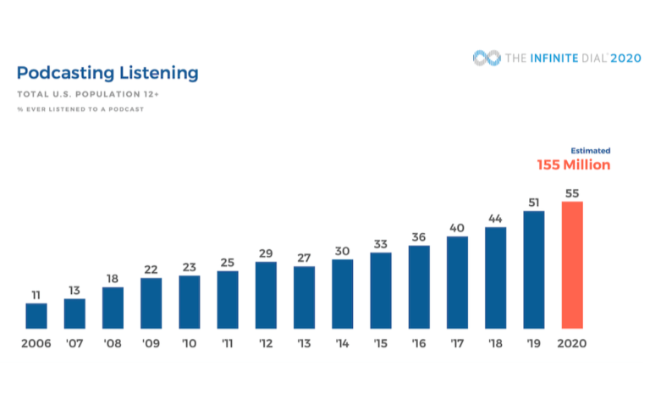

Facebook is venturing into the realm of podcasting, offering creators the opportunity to link their iTunes RSS feeds with Facebook for automatic aggregation of episodes on the news feed. This new Facebook podcast feature presents several advantages for content creators.
Reasons to Add Your Podcast to Your Facebook Page
Adding your podcast to Facebook opens up a host of benefits. Firstly, it expands your reach to audiences who may not access iTunes, allowing you to engage with a broader audience effortlessly. Here are some compelling reasons to create a Facebook podcast page:
Reach a Wider Audience
Having your podcast on Facebook extends beyond the audio experience, enabling direct engagement with your audience. By leveraging Facebook's interactive features, you can foster conversations, gather feedback, and create supplementary content, amplifying your podcast's impact.
Explore New Features
Facebook offers an array of audio creation tools for podcasts, including text-to-speech, voice modulation, and audio editing capabilities within the platform. These tools enhance the content creation process and allow for seamless integration of diverse audio elements.
Monetization Opportunities
Facebook's podcast feature opens avenues for creators to monetize their content through various means such as donations, subscriptions, and audio creator funds. This monetization potential positions Facebook podcasts as more than just a platform feature but a revenue-generating opportunity.
Live Audio Rooms
Engagement is key in podcasting, and Facebook's Live Rooms feature enables creators to interact with their audience directly. By hosting live discussions and Q&A sessions post-podcast, creators can deepen audience engagement and build a community around their content.

Steps to Integrate Your Podcast with Facebook
If you're considering adding your podcast to Facebook, here are actionable steps to guide you through the process:
1. Set Up Your Facebook Business Page
Begin by creating a Facebook Business Page, where you can share your podcast content and engage with your audience. Customize your page with relevant details and optimize it for searchability.
2. Complete Your Facebook Profile
Enhance your page by adding visuals, such as a banner photo and profile picture, and providing a compelling description of your podcast. Optimize your profile to attract and inform potential listeners.
3. Link Your Podcast to Facebook
Utilize an RSS feed to connect your podcast to Facebook seamlessly. By uploading your episodes to iTunes and generating an RSS feed link, you can automate the sharing of new episodes on Facebook, reaching a wider audience effortlessly.
FAQs About Adding Your Podcast to Facebook
Curious about the integration process? Here are some common questions answered:
Which podcast channels can connect to Facebook?
Currently, only iTunes is compatible with Facebook for podcast sharing. However, utilizing an RSS feed ensures cross-platform accessibility for your content.
Can you use Facebook Ads to promote your podcast?
While Facebook Ads for podcasts are not yet available, leveraging ads to promote your podcast's Facebook page can enhance visibility and engagement among your target audience.
Why should you consider Facebook podcasts as a revenue stream?
Facebook's monetization options, analytics tools, and interactive features make Facebook podcasts a lucrative avenue for creators to generate income and expand their listener base.
By embracing Facebook's podcast feature, creators can tap into a dynamic platform that offers engagement, monetization, and growth opportunities for their podcasting endeavors. As the podcasting landscape evolves, integrating your podcast with Facebook can be a strategic move to enhance your reach and impact.
Frequently Asked Questions
What is the difference in marketing and advertising?
Advertising is communication that promotes brands or products. Advertising has a clear call of action. For example, “Buy now!” or “Click here.”
Marketing is, on the contrary, a way to communicate your company’s mission, vision and values to potential clients. Marketing is also a way to establish relationships with potential customers and current customers.
For instance, if you sell shoes online, you may use marketing to tell your story about who you are and what you offer. Your history, philosophy and commitment to quality could be discussed. You could even share testimonials of satisfied customers. For people to come to your website, you could offer them a free pair of shoes.
Marketing, or telling stories, is in essence about telling stories. Advertising is selling things.
What kind of eCommerce Marketing Strategy Should I Follow?
There are three types to eCommerce marketing.
- Direct marketing
- Search Engine Optimization, (SEO)
- Social Media Marketing
Direct marketing involves sending emails directly from the source to potential customers. These emails can contain special offers and coupons. This type marketing aims at building customer loyalty and trust.
Search engine optimization works by improving the ranking of your website in search engines like Google, Bing, Yahoo, etc. More people will find your site if it appears near the top when they search for keywords that are related to your product or services.
Social media marketing includes websites like Twitter, Facebook Pinterest, Instagram, YouTube, and Instagram. Connect with your audience. It's easy to set-up and use, and it's effective.
Each method has its own pros and cons. SEO is time-consuming and requires effort while direct advertising is easy to do. It is possible to miss the entire benefit of eCommerce marketing if your focus is on one method. Combining different marketing strategies is a good idea.
You could, for example, send emails advertising your products to rank high in search engine results. Or you could advertise on social media and then link to your site from those pages.
You can market your eCommerce store in many different ways, as you can see. You can choose the most effective for your business, and then implement them over time. Good luck!
Which are the four types marketing?
Marketing can be broken down into four distinct categories: Direct Mail Marketing, Traditional Advertising and Public Relations. Each goal has a different purpose and should each be used for its intended purpose. You can combine them to achieve your goals.
What should I budget on my first digital marketing campaign for?
It all depends on what type of campaign you want to launch. It can cost between $50-$100 to launch your first campaign.
To get started, advertising space can be bought on search engines Google and Bing. These ads are usually $10 per click.
If you have a website, you can create banner advertisements at various places on your site. This will help you attract new visitors and bring them back to your site.
You may also be able to hire a freelancer who will design your banners. Freelancers usually charge between $20-$30 per hour.
After you've created your first ad you can start tracking the results. You can find many free analytics software on the internet.
It is also possible to track data manually. To track information about your campaigns, keep a spreadsheet that records each metric (clicks, impressions and so on).
After collecting this data, you can determine whether your campaign was successful.
You can always try other methods until you find the one that works.
What are the 5 Marketing Concepts?
These are the five main marketing concepts
- Branding – A brand is what people think of when they hear your name. It's the first thing people associate with your name. You need to create a brand identity that is consistent across all media.
- Positioning – Your positioning is the way you position yourself in your market. What is the best way to describe yourself?
- Message- This is your message's main content. What is your point? Why should someone purchase from you?
- Marketing mix – This includes channels, pricing, promotions, and other marketing tools that help you reach your target audience.
- Measurability – How can you measure your success?
What are the best digital strategies I can do at home for marketing?
Digital marketing can be a great way to reach customers who spend their most time online. It is also an excellent way to generate leads that will help your business.
Your brand can be promoted using social media platforms like Facebook and Twitter. Email marketing tools can be used to send emails to prospects and clients.
You can also market your product and service in digital media in many other ways.
If you're able to use these channels effectively, it shouldn't be a problem getting started.
Statistics
- A poll earlier this year found that 14% of older Gen Z's had bought an item in the previous six months based on an influencer's recommendation. (influencermarketinghub.com)
- 81% of brands employ affiliate marketing, and eCommerce sites are particularly good candidates. (blog.hubspot.com)
- Companies that use personalization are seeing revenue increases ranging from 6-10%. (blog.hubspot.com)
- Many experts recommend you share 20% of your promotional content and 80% of other valuable content you find. (marketinginsidergroup.com)
- From 2020 to 2022, eMarketer predicts that digital marketing will grow by 36% and take up 54% of marketing budgets! (marketinginsidergroup.com)
External Links
moz.com
- SEO Learning Center – Moz
- [Case Study] How We Ranked #1 for a High-Volume Keyword in Under 3 Months – Moz
influencermarketinghub.com
youtube.com
blog.hubspot.com
How To
What is your strategy for marketing?
Did you hear the phrase “If You build it, they'll come” many times?
Well, you're wrong.
Although building something is hard work, it's not enough if you want to attract customers. Internet Marketing Principles are essential to grow your business.
Internet Marketing Principles can be described as the principles that are used by marketers to create websites and blogs, email campaigns, social profiles, etc. that generate leads.
If you sell handmade jewelry online, these Internet Marketing Principles will help you drive traffic to your website, capture emails and close the sale.
Here are some examples from Internet Marketing Principles.
- Content is king – Your content needs to be unique and compelling. If you copy someone else's content, you'll lose credibility as a source of information.
- Establish trust – More people trust recommendations from close friends and family than advertisements or Adsense. You should only recommend products that you trust.
- Be personal – People prefer to talk to real people rather than robots. Make sure your website looks human, not robotic.
- Offer value – People will only give out free stuff if you feel they are getting something in return. For their contact information, give them something for free.
- Storytelling is a powerful tool for connecting with your audience. They allow you to tell your story and make connections with your audience.
- Giveaways – Giving away things helps build brand loyalty and awareness.
- Using call-to-action buttons is important because they prompt users to take action.
- Before you launch your website live, make sure to test everything.
- Keep it simple. Complexity is better than simplicity. It is best to keep things simple when possible. Simpler websites are easier to update and maintain.
- Achieve a clear goal. It is easier to measure the results of your efforts if you have a clear goal.
- Measure everything – It's crucial to measure your progress towards your marketing goals.
- Concentrate on conversion. – Conversion is the act of turning web browsers into buyers.
- Get feedback. Feedback can help you improve your marketing efforts.
- Track results – By keeping track of your results you can identify areas where you need to improve.
- Repeat – The repetition of a pattern creates momentum.
- Optimize your efforts – Optimization ensures that your marketing efforts are working effectively.
- You must be consistent. Your brand will always be remembered.
- Reward yourself. Rewards can motivate you to do better.
- Learn from other people – This is one way to avoid making the exact same mistakes.
- Never stop learning.
- Think long-term – Long-term thinking is necessary to achieve sustainable growth.
- Trust your intuition – Sometimes your intuition is the best tool to help you navigate your way through life.
- Treat each day as a trial run. Although mistakes are inevitable they teach us lessons that we wouldn’t otherwise know.
- Know your strengths and weaknesses. This will help you to overcome obstacles.
- Don't let your failures discourage you. Everyone has failed at least once. But don't let failure discourage you. Keep trying again.
- Take risks – Sometimes taking risks is necessary in order to move forward.
- Enjoy the journey. This is key to living a happy and fulfilled life.
- Be passionate – Passion fuels motivation.
- Remain true to yourself – It's important to establish relationships.
- Know thyself – Self-knowledge is essential to self-improvement.
- Find your tribe. A supportive community of likeminded individuals is invaluable.
- Make a vision board. Vision boards can be a great tool for visualizing your future.
- Ask questions – Questions are the gateway to knowledge.
————————————————————————————————————————————–
By: 3037
Title: Step-by-Step Guide: Adding Your Podcast to Facebook
Sourced From: internetlib.org/how-to-add-your-podcast-to-facebook/
Published Date: 7/22/2021 5:26:26 PM