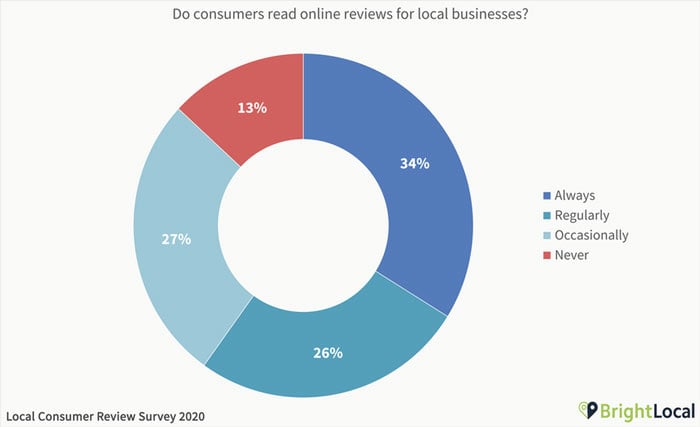

Online reviews are a critical element for the success of any business in today's digital landscape. In the past, word-of-mouth recommendations from friends and family held significant weight. However, with the rise of the internet, online reviews have become the go-to source for consumers seeking advice on purchasing decisions.
The Importance of Good Online Reviews
Good online reviews are essential for the success of your business. Research shows that 87% of consumers rely on online reviews to make informed decisions about what to buy, where to stay, and where to dine. Neglecting your online reviews can significantly hinder your business.
Impact of Online Reviews
Online reviews play a crucial role in influencing search engine rankings. According to a Moz study, review signals contribute to about 15% of ranking factors. Positive reviews also enhance social proof, which builds trust and credibility with consumers.
Top Platforms for Online Reviews
When it comes to online reviews, focusing on prominent review sites is crucial. Google, Amazon, Facebook, and Yelp are among the top platforms for online reviews, with millions of monthly visitors. Optimizing your presence on these platforms can significantly impact your business's visibility and credibility.
Google My Business
Google My Business is a key platform for local businesses to enhance their online presence. By optimizing your Google My Business profile and encouraging positive reviews, you can improve your business's visibility in local search results.
Amazon
Amazon is a popular platform for product reviews. Positive reviews on Amazon not only build consumer trust but also improve your product's visibility in search results, leading to increased sales.

Yelp
Yelp is essential for locally-based businesses looking to attract customers. By focusing on high-quality reviews on Yelp, you can enhance your business's reputation and credibility.
Facebook Reviews are valuable for all types of businesses. Setting up a Review Tab on your Facebook Page and encouraging customers to leave reviews can boost your brand's credibility and trustworthiness.
Strategies for Generating High-Quality Reviews
Implementing strategies to incentivize reviews, monitoring review platforms, addressing negative feedback promptly, and asking the right customers for reviews are key tactics for generating high-quality online reviews.
Optimizing Online Review Process
By highlighting positive reviews, leveraging them as testimonials, and asking for reviews at the right time, you can maximize the impact of online reviews on your business's success.
Conclusion
Online reviews are a powerful tool for attracting new customers and building trust with existing ones. By prioritizing your online reputation and implementing effective review strategies, you can enhance your business's credibility and drive growth.
Frequently Asked Questions
Social Media Marketing allows you to promote your company online. It's a powerful tool to promote brand awareness as well as generate leads and sales. Here are five ways to use social media marketing to boost your business.
- Create a Facebook Fanpage – This allows customers to interact directly via Facebook. You can also upload content such as photos, videos, and other files.
- Twitter: Promote your business – Twitter is another great place for information sharing and connecting with people. Increase visibility by using hashtags
- Post Videos on YouTube – Uploading videos is very popular because many people enjoy watching them. If they like what you have to offer, they might click through to your site.
- Host Live Event – Hosting live events will allow you to meet face to face with potential clients. They can ask any questions about your services and products.
- Respond to Customer Reviews – Positive reviews help build trust with your clients and encourage repeat purchases. Negative comments should be addressed quickly.
What is eCommerce Marketing?
Ecommerce marketing is simply online shopping. It's selling products via the Internet. This can include buying products from companies and then selling them online. If you are an individual vendor, this includes selling on eBay. You may also have a business set-up where you sell goods for profit. You want to make money online selling your products.
Here are more details concerning eCommerce marketing
The first step in creating a successful eCommerce site is to identify the type of products that you are looking to sell. First, determine whether you are going to sell one item (a book), or several items (such as DVDs and books).
Once you have an idea of the products you want to offer, it's time to search for suppliers. A supplier is a company that makes and sells the product you want to sell. For example, if you wanted to start selling greeting cards, you'd need to find a supplier that made and sold greeting cards.
After you've found a supplier, you'll need to create a website to display the products and allow buyers to purchase them. Some suppliers offer templates that you can use, while others require you create your template. After you have your website built, it's time to market it. This involves posting articles on forums and websites, advertising on Google Adwords and emailing relevant contacts.
Promoting your eCommerce business can be done in many different ways. These include search engines, email, social networks, mobile apps, and search engines.
- Email marketing is a popular choice for many businesses. It's cost effective, easy to use, and delivers great results. But, it takes a lot of time and effort to generate quality leads.
- Search engine optimization (SEO) is a technique used to improve the ranking of a webpage for specific keywords. This is usually done by link building which improves pages ranking in search engines.
- For businesses, social networking sites like LinkedIn and Facebook are increasingly important. Many people use these websites every day to stay in touch with family and friends. Posting interesting content on these sites will help you get exposure to thousands more people.
- Mobile apps are also a valuable tool for eCommerce marketers. People love shopping with their tablets and smartphones. Apps allow you to reach customers from anywhere.
eCommerce has been a growing business. There are many avenues to promote your small business. Make sure you choose wisely to reap the rewards of eCommerce marketing.
What is an example search engine marketing?
Search Engine Marketing (SEM) is one of the most essential components of digital marketing. SEM can include paid-per-click ads, sponsored links and display ads, as well as paid inclusion, search engine optimization, social media marketing (SEO), video marketing, mobile advertising, and more.
What are the 7 Steps of Internet Marketing Strategy?
Internet marketing strategies allow businesses to achieve their business goals by using online media. The seven basic steps include planning, research, implementation, monitoring, analysis, optimization, and evaluation. Each step is critical for effective internet marketing, and should always be done.
- Planning – This step involves identifying and developing a strategy for reaching your target audience. Consider who might purchase your product/service.
- Research allows you to better understand your customers' needs and interests so you can make the right product or service choices. It also gives you valuable insights into popular trends and consumer behavior.
- You will need to choose a platform (e.g. Facebook) and decide where you want your ads placed. Once you have chosen your platforms, it's important to ensure that they are correctly configured. Also, consider whether to pay per Click or spend money advertising.
- Monitoring – Monitoring ensures you know if your efforts are working. Use analytics tools like Google Analytics to track traffic flows, conversion rates, and customer demographics.
- This allows you compare results to benchmarks as well as previous performance levels. This step will help you to identify areas that are underperforming.
- Optimization – Optimizing the site is about making improvements to make it more attractive to visitors. Your site could be enhanced with new features, or changed in the way that users navigate.
- Evaluation – Evaluate the performance of your campaign. Is there room for improvement? If not, then you may have reached your goal. You'll still need to address any issues.
What are some indirect marketing examples?
Think of ways you could use indirect marketing techniques to promote your business. For example, you might create a social media campaign encouraging people to share pictures of themselves using your product. This would help spread the word about your brand.
Advertisements in local newspapers could be used to encourage readers to visit your auto repair shop rather than other shops.
Others include posting advertisements on bulletin boards or sending coupons to customers’ e-mail addresses.
Direct marketing is a great option because it's not expensive.
But trusting people takes time. You'll need patience as you promote your business.
You should also keep track of how successful your campaigns are. Track the number leads generated by each method.
This will allow you to see which methods are most effective for your business.
What kind of eCommerce Marketing Strategy Should I Follow?
There are three types of eCommerce marketing.
- Direct marketing
- Search Engine Optimization, (SEO)
- Social Media Marketing
Direct marketing involves sending emails directly from the source to potential customers. These emails can contain special offers and coupons. This type is used to build customer trust and loyalty.
Search engine optimization improves the rank of your website on search engines such Google, Yahoo, Bing, etc. If your website ranks near the top for searches related to keywords, you will get more traffic.
Social media marketing is done using websites like Twitter, Facebook and Pinterest. Your audience to build trust. It's easy to set-up and use, and it's effective.
Each of these techniques has its strengths and weaknesses. For example, SEO requires time and effort, while direct marketing doesn't require much effort. However, if you only focus on one method, you won't see the full benefit of eCommerce marketing. Therefore, we recommend combining different types of marketing.
To promote your products, you can send emails and get high rankings in search engine results. Or you could advertise on social media and then link to your site from those pages.
As you can see there are many options to market your eCommerce shop. Choose the best work for your business and implement them consistently over time. Good luck!
Statistics
- Companies that use personalization are seeing revenue increases ranging from 6-10%. (blog.hubspot.com)
- From 2020 to 2022, eMarketer predicts that digital marketing will grow by 36% and take up 54% of marketing budgets! (marketinginsidergroup.com)
- 81% of brands employ affiliate marketing, and eCommerce sites are particularly good candidates. (blog.hubspot.com)
- This allows us to deliver CPCs that are 80% less than average and CTRs 4-5 times higher than average. (marketinginsidergroup.com)
- A poll earlier this year found that 14% of older Gen Z's had bought an item in the previous six months based on an influencer's recommendation. (influencermarketinghub.com)
External Links
statista.com
hubspot.com
influencermarketinghub.com
blog.hubspot.com
How To
Six Types of Ecommerce Advertising
How do I market my eCommerce store?
Ecommerce marketing is one the most difficult marketing tasks. It requires you to understand your customer's behavior, their buying process, and how they interact with your products and services. This information will allow you to create an effective strategy to reach your goals.
There are six kinds of eCommerce marketing strategies.
- Product Strategy – The first thing you need to do is decide which product you want. There are three major categories: physical goods (things), virtual goods (services) and membership sites. Once you have determined which category you want, you can decide whether or not to offer wholesale prices. Wholesale pricing allows you to set the price for your products. While retail pricing charges customers directly for your products.
- Pricing Strategy: Next, decide how much you want to earn from selling products. You should consider profit margins, competition, shipping costs, taxes, etc. Two ways to increase profits are possible when pricing your strategy: reduce your cost per sales and/or increase the volume of your sales.
- Promotion Strategy: Now comes what? Your business needs a promotion plan that is most effective. Promo strategies that work best for your business include free shipping, special deals, discounts, coupons, and other offers. Try brainstorming new ideas for promotional items if you don’t have any.
- Shipping Strategy: After you've determined how to promote the products, think about how to get them to people. Are you shipping via USPS, FedEx or UPS? Are you going to use a fulfillment center or will you do it all yourself?
- Merchandise Management System- The software you use to manage your inventory, track orders or fulfill orders is called the merchandise management system. You have the option to choose from many systems, depending on your preferences and budget.
- Customer Service Strategy – Finally, you must create a customer service strategy that is effective for your business. What support options are available? Will they be via email or phone? Can customers contact you through live chat, social media, or even snail mail?
————————————————————————————————————————————–
By: 3231
Title: How to Optimize Your Online Reviews for Business Growth
Sourced From: internetlib.org/how-to-make-sure-your-online-reviews-bring-you-business/
Published Date: 8/9/2021 5:23:16 PM