
Having a marketing plan isn’t enough for success. You need strategic marketing objectives to help you set, plan for and achieve your business goals. And you need to have them not just for your overall marketing plan but also for specific portions, such as paid social media marketing.
Understanding Marketing Objectives
Marketing objectives are a set of trackable, measurable, clearly defined goals to help you expand your business. These can include profit-based goals like making sales, growth-based goals such as increasing subscribers, fans, etc., and awareness-based goals like gaining unique visitors. These objectives often use the SMART method of goal setting.
SMART Goals for Marketing Objectives
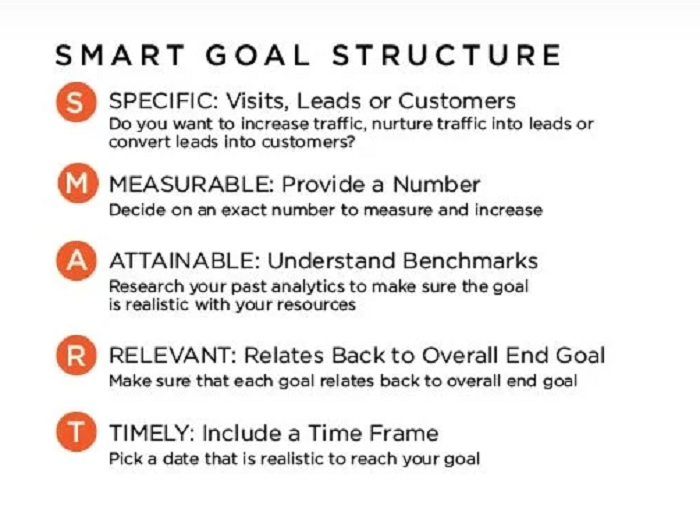
SMART stands for Specific, Measurable, Attainable, Relevant, and Timely. Tailoring your goals using this framework can help you achieve success. For example, you can set specific targets for visits, leads, or customers, provide measurable numbers, understand benchmark attainability, ensure relevance to the overall goal, and include a realistic time frame.
Types of Marketing Objectives
1. Increasing Brand Awareness: Focus on metrics like social media visitors, page visits, and target demographic visitors to boost brand awareness.
2. Increasing Repeat Visitors: Improve on-page retention, social media engagement, and reduce bounce rates to enhance user loyalty.
3. Increasing Subscribers: Set goals to increase subscriber numbers and reduce unsubscription rates to grow your audience.

4. Promoting a New Product: Drive traffic to new product landing pages, boost social media engagement, and increase sales through organic traffic.
5. Increasing Sales: Enhance conversion rates, connect with influencers, and boost affiliate sales to drive revenue.
6. Increasing Revenue: Focus on increasing profit margins, reducing marketing costs, and lowering customer acquisition costs to boost overall revenue.
7. Optimizing the Conversion Funnel: Identify and fix conversion funnel weak spots, increase conversions, and reduce customer acquisition costs.
8. Growing Your Digital Presence: Post engaging content, increase social media followers, and reach new users daily to expand your online reach.
9. Reaching International Audiences: Set goals to reach users in specific countries, convert international users, and engage with international visitors.

10. Increasing On-site Time: Reduce bounce rates and increase user reading time to enhance user engagement.
Choosing and Meeting Marketing Objectives
Consider your business goals, gather perspectives, narrow down your options, test your goals, and repeat the process with new objectives. Periodically check progress, track SMART goals, and include expert suggestions to meet your objectives effectively.
FAQ about Social Media Marketing Objectives
1. Can my business have more than one marketing objective?
2. Who should set the marketing objectives for a successful social media ad campaign?
3. What are the most important marketing objectives?
4. What to do if my business isn't meeting any marketing objectives?
5. How often can you change your marketing objectives?
Setting SMART marketing objectives can transform your business's success in reaching and engaging with your target audience. Choose your marketing objective wisely to drive growth and achieve your business goals.
Frequently Asked Questions
What are 5 marketing concepts you should know?
The five marketing concepts are:
- Branding: A brand is a person's image. It's what people associate with you when they hear your name. You need to create a brand identity that is consistent across all media.
- Positioning – Your positioning is the way you position yourself in your market. How do you describe who you are, and why should anyone care?
- Message: This is the message. What is the point of your message? What's the point?
- Marketing mix is when you combine channels, pricing, or promotions to communicate your message to your target audiences.
- Measurement – How do you measure success?
What is search engine marketing?
Search Engine Marketing is a key component of digital marketing. SEM includes paid advertising, sponsored ads, display ads and paid inclusion. It also includes search engine optimization (SEO), mobile marketing, social media marketing, video advertising, mobile advertising, and other related services.
How do you build an Ecommerce Marketing Plan
First, you need to decide what products or services you want to market. You should have a range of products and services that are related to your business.
The second step is to determine how much advertising, promotion, and other marketing strategies you will need. There may be multiple marketing methods you need, such direct mail and email blasts as well as social media sites and search engine optimization.
Once you've determined how much money you require, you can create a budget. A professional who specializes in emarketing might be able to help you choose the best marketing method for your company. They can help decide the best marketing strategy for your business.
Once you have your plan in place you can begin to implement it. This can be made easier by hiring someone to do the job for you.
It doesn't mean you have to start over. Rely on proven strategies that have been successful for other online stores. Always test all changes before making them.
Remember that your ultimate goal should be to increase sales and profit. Your eCommerce marketing strategy must consider both short-term goals as well as long-term plans.
We have some eCommerce marketing tips that will help you boost your sales. We hope you find them useful!
What are some examples of direct marketing?
Direct Marketing Examples include postcards, brochures, flyers, e-mails, etc.
Direct marketing allows you to reach people wherever they are. It's the best way to communicate with customers who have already chosen your product or service over another brand.
You should know which message will appeal to your target market the most.
You need to know what your customer wants, and then deliver it.
Direct marketing can be used to promote your business in many different ways. You could send brochures to potential clients or advertise in local newspapers.
You could also create a separate mailing list for your customers. You can easily add new subscribers to your list if you have a good contacts database.
Last but not least, ask existing customers if promotional materials are something they'd be interested in receiving. Some companies offer discounts to those who sign up for special offers.
What is the role of marketing in a business strategy?
Marketing is an essential part of every business strategy. Without marketing, no one will know what your company has to offer. Without sales, marketing would not be possible. Therefore, marketing is crucial to any business strategy.
However, not everyone is aware of the importance and value of marketing. Marketing is often thought to be about advertising campaigns. Marketing is much broader than that. Marketing can be described as everything you do that communicates your company's identity or position in the market.
So when you're thinking about your business, ask yourself these questions: What kind of image am I trying to convey? What will my customers think of me? How can I best present myself to the world
If you don’t know the answers to these questions, you probably haven’t considered marketing.
What are the four types of marketing?
Marketing is broken down into four main categories: Direct Mail Marketing and Traditional Advertising. Public Relations is also included. Digital Marketing falls under the umbrella of digital marketing. Each has different objectives, and each should be used for specific purposes. These can be combined to help you reach your goals.
Statistics
- This allows us to deliver CPCs that are 80% less than average and CTRs 4-5 times higher than average. (marketinginsidergroup.com)
- Today, 81% of brands around the world have affiliate programs. (influencermarketinghub.com)
- From 2020 to 2022, eMarketer predicts that digital marketing will grow by 36% and take up 54% of marketing budgets! (marketinginsidergroup.com)
- Companies that use personalization are seeing revenue increases ranging from 6-10%. (blog.hubspot.com)
- According to statistics, 60% of online shoppers worldwide actively search for coupons before purchasing from a virtual shop. (influencermarketinghub.com)
External Links
blog.hubspot.com
neilpatel.com
youtube.com
statista.com
How To
How can you tell if your branding efforts are working?
Asking customers directly is the best method to measure your success. Ask them to rate your brand. What do they like most about your company? What don't they like? How can you improve?
Surveys are also possible on social media platforms like Facebook and Twitter. Post a question and ask your followers for their opinions about your brand. Then, you can analyze the results and decide which aspects of brand success are most important.
Also, you can read customer reviews. People love to voice their opinions when they're happy or disappointed with a business. These comments will help you understand the opinions of people about your brand.
If you're looking at improving your brand, here are some tips:
- Be consistent. Do not change your marketing materials for every new product. You should keep your message consistent across all channels.
- Use multiple channels. Use email, websites and social media to promote your brand.
- You must ensure that you give your customers exactly what they need. If you offer free shipping, make sure you deliver on that promise. If you don't deliver on your promise, customers might abandon you.
- Remember that your brand is more than just a logo. Your brand is the foundation of everything you do. Make sure you have a balanced image.
- Get feedback from your customers. The sooner you get feedback from your customers, the better.
- Test different messages. You may discover that one message works better than another. Or perhaps you have two similar messages and one gets more attention than the other. Either way, it's good to keep an eye on your stats to see which message is performing best.
- Find ways to improve your brand. Is there a way you could improve your brand? Perhaps your website could use more videos. Or maybe you could include more customer testimonials in your blog posts.
- A plan is essential. Once you have determined your goals and objectives you need to create a strategy for achieving them. This includes creating a timeline for reaching each objective. It is also important to set up milestones throughout the journey so you can track your progress.
- Measure your results. As soon as you reach your goal, stop measuring. Instead, create a system that will track your progress over time. You'll know whether you are making steady progress towards your ultimate goal.
- Repeat! You've built a strong foundation for your brand. Now you want to keep building on it. You might consider hiring someone to assist you if you have trouble keeping up with current marketing efforts.
- Positive thinking is key. While you should never ignore negative feedback, you shouldn't dwell on it either. Instead, you should focus on how this information can be used to improve your brand.
- Take advantage of technology. Technology has given us many options that we didn't know existed. So, why not use them to your advantage? A mobile app could be created for your brand, for instance.
- Try thinking outside the box. You don't have to be afraid of trying something new. It's okay to try something new, but don't forget to think first.
- Have fun. Marketing shouldn't be stressful. Marketing can be described as “fun marketing.” You should have fun working.
- When to give up. It's okay when you feel you have done everything you can. You shouldn't give in too quickly. Sometimes, you need to keep at it until you get the result you want.
- You must not forget about consistency. Consistency is key for success. Make sure you have a plan in place for your brand.
- Be patient. It takes time to build a brand that is successful. It won't happen overnight.
- Keep learning. Marketing is always changing. Keep up-to-date by reading blogs and attending webinars.
- Never stop learning. Even after achieving your goal you can still learn.
- Enjoy the ride. Marketing is fun. Marketing is fun.
————————————————————————————————————————————–
By: 2917
Title: Effective Marketing Objectives for Success in Business
Sourced From: internetlib.org/how-to-write-perfect-paid-social-media-marketing-objectives-with-examples/
Published Date: 7/11/2021 5:13:27 PM