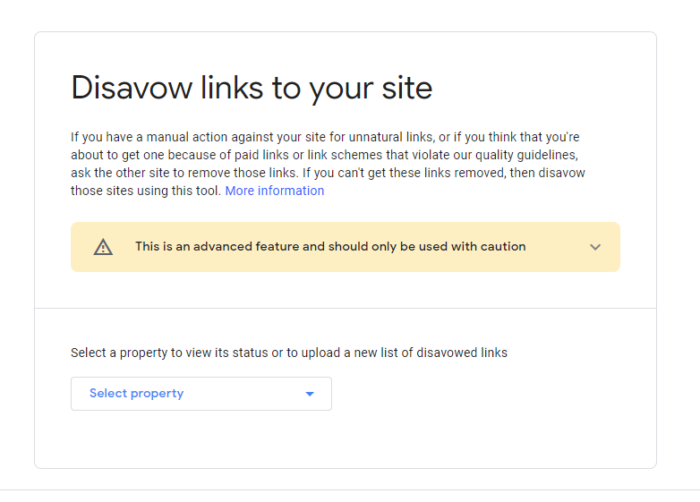

Hey there, website owners! Just like your annual health check-up, keeping an eye on your backlinks' quality is crucial for your online well-being. Think of it as a preventive measure to maintain your website's health and performance. Let's dive into the world of Google's Disavow Tool and how it can be your SEO ally!
Understanding the Power of Google’s Disavow Tool
Let's start by demystifying the concept of disavowing links. Good backlinks can be your site's best friend, boosting its authority and visibility. On the flip side, toxic backlinks can drag down your SEO efforts faster than a lead balloon, impacting your rankings and traffic.
The Purpose Behind Disavowal
Disavowing a link means telling search engines to ignore it. This can be a lifesaver when dealing with shady or irrelevant backlinks that do more harm than good.
When to Harness the Disavow Tool’s Magic
Wondering when to reach for the disavow button? Here are some red flags to watch out for:
Signs You Might Need to Disavow
- Websites that exist solely for link building
- Spammy sites that scream "Stay away!"
- Links hiding in spammy comments
- Backlinks from countries you aren't targeting
Mastering the Art of Disavowal
Now, let’s talk about the dos and don’ts of using the disavow tool effectively:
Your Disavowal Roadmap
- Try to remove unwanted links before disavowing
- Use the tool wisely for those low-quality backlinks
- Opt for a domain-level disavow for a quicker clean-up
Step-by-Step Disavowal: Your Ultimate Guide
Ready to take action? Here’s your roadmap for making the most of the disavow tool:

Your Disavowal Journey
- Collect and assess all your backlinks
- Categorize the good, the bad, and the ugly
- Consider manual removal as your first line of defense
- Prepare a well-structured disavowal text file
- Add clear explanations to guide the disavowal process
- Submit your file via Google’s Disavow Tool interface
Avoiding Pitfalls: Common Mistakes to Sidestep
Don’t stumble on your path to disavowal success. Keep these blunders at bay:
Steer Clear of These Missteps
- Stick to plain text files for uploading
- Consider starting with a domain-level disavowal cautiously
- Ensure proper syntax in your disavowal file
- Save detailed explanations for reconsideration requests
- Use comment tags to prevent any syntax hiccups
Answering Your Burning Questions About the Disavow Tool
Got queries? We’ve got answers! Let’s clear the fog around the disavow tool:
FAQs Unpacked
- How often should you use the disavow tool?
- When to choose manual removal over disavowal?
- Can you reavow a link after mistakenly disavowing it?
- How soon can you expect improvements in traffic and rankings?
By wielding Google's Disavow Tool wisely, you shield your website from harmful backlinks. Remember, a strategic approach to disavowal can work wonders for your site’s visibility and rankings. Ready to take the reins and steer your SEO journey to success?
Frequently Asked Questions
What are some examples for direct marketing?
Direct Marketing Examples include postcards, brochures, flyers, e-mails, etc.
Direct marketing helps you reach people at home or on the go. It's the best way of communicating with customers who have already selected your product/service over another.
You should know which message will appeal to your target market the most.
It is important to understand your customer's needs and give it to them.
Direct marketing can be used for many reasons. You could send brochures to potential clients or advertise in local newspapers.
Another option is to create your own mailing list from existing customers. A good contact database will make it easy to add subscribers to your mailing list.
Ask your customers if they would like promotional material. You may receive special discounts if you sign up for company newsletters.
What kind of eCommerce Marketing Strategy Should I Follow?
There are three types to eCommerce marketing.
- Direct marketing
- Search Engine Optimization (“SEO”)
- Social Media Marketing
Direct marketing involves sending emails directly to potential buyers. These emails can contain special offers and coupons. This marketing strategy aims to build customer loyalty.
Search engine optimization improves the rank of your website on search engines such Google, Yahoo, Bing, etc. More people will find your site if it appears near the top when they search for keywords that are related to your product or services.
Social media marketing involves websites such as Twitter and Facebook, Pinterest, Instagram and YouTube. You can connect with your target audience. It's easy to set-up and use, and it's effective.
Each of these techniques has its strengths and weaknesses. SEO takes time and effort, whereas direct marketing requires little effort. If you are only focused on one aspect of eCommerce marketing, you may not see the full benefit. Combining different marketing strategies is a good idea.
To promote your products, you can send emails and get high rankings in search engine results. Another option is to advertise on social networks and then link directly to your site via those pages.
You can market your eCommerce store in many different ways, as you can see. You can choose the most effective for your business, and then implement them over time. Good luck!
What budget should I set aside for my first campaign in digital marketing?
It depends on which campaign you are planning to launch. Your first campaign may cost you between $50 and $100.
Advertising space can be purchased on search engines such Google and Bing. These ads typically cost $10 per click.
Banner advertisements can be placed on websites. This will attract new visitors to your site and help them return.
You may also be able to hire a freelancer who will design your banners. Freelancers typically charge between $20 and $30 per hour.
After creating your first ad for the site, you can track its performance. There are many analytics tools available for free on the Internet.
You can also manually track data. You can also keep track of data manually to gather information about your campaigns.
Once you have collected this data, it is possible to determine if your campaign has been successful.
If not, you can try different methods until you find one that works well.
Which are the four types marketing?
Marketing can be divided into 4 categories: Direct Mail Marketing (Traditional Advertising), Public Relations (Public Relations) and Digital Marketing. Each of these categories has different goals and should only be used for specific purposes. These can be combined to help you reach your goals.
What are the best digital strategies I can do at home for marketing?
Digital marketing is a powerful way to reach customers online. This is a great opportunity to generate leads and customers for your business.
Social media platforms such as Facebook, Twitter, or LinkedIn can be used to promote your brand. Email marketing tools can be used to send emails to prospects and clients.
You have many options for marketing your product or service via digital media.
If you're able to use these channels effectively, it shouldn't be a problem getting started.
What is the difference of advertising and marketing?
Advertising is communication that promotes brands or products. Advertising usually has a clear call to action, such as “Buy now!” Click here.
Marketing is on the flip side, it's a way for your company to communicate its mission, vision, values, and other information to potential customers. Marketing also helps build relationships with current customers and prospects.
If you sell shoes online, for example, marketing can be used to tell the story of who you are and what your offer. You might talk about your background, philosophy, or commitment to quality. You could even share testimonials of satisfied customers. You could even organize an event in which you give away shoes for free to encourage people to visit you website.
Marketing is simply telling stories. Advertising is all about selling products.
Statistics
- Companies that use personalization are seeing revenue increases ranging from 6-10%. (blog.hubspot.com)
- A poll earlier this year found that 14% of older Gen Z's had bought an item in the previous six months based on an influencer's recommendation. (influencermarketinghub.com)
- 81% of brands employ affiliate marketing, and eCommerce sites are particularly good candidates. (blog.hubspot.com)
- In 2017, 34% of marketers cited co-branding as the most effective way to increase the number of email subscribers. (influencermarketinghub.com)
- Meanwhile, a PartnerPath poll found that co-marketed ads help 68% of consumers arrive at a buying decision before even speaking to a salesperson. (influencermarketinghub.com)
External Links
youtube.com
statista.com
neilpatel.com
- How to Use Search Engine Optimization to Build Your Brand
- Marketing Automation: Examples & Tools (2022)
moz.com
- SEO Learning Center Moz
- [Case study] How we ranked #1 in a high-volume keyword in under 3 months – Moz
How To
How can I find out if my brand efforts are successful?
Asking customers directly is the best method to measure your success. Ask your customers to tell you what they think about the brand. What do they love most about your company's brand? What are their biggest complaints? How can you improve?
Surveys can be conducted on social media sites such as Facebook and Twitter. Ask your followers to rate your brand. Next, analyze the results to find out which aspects of your brand have been most successful.
Review sites are another option. Customers love to share their experiences with businesses, whether they are happy or dissatisfied. Read through these comments carefully to understand what people think about your brand.
If you're looking at improving your brand, here are some tips:
- Be consistent. Keep your marketing materials consistent. Your message must remain consistent across all channels.
- Use multiple channels. Use email, websites and social media to promote your brand.
- Give your customers what they want. You must deliver on your promises of free shipping if it is offered. Customers who expect quick delivery may be disappointed.
- Remember, your brand is more that a logo. Your brand is the foundation of everything you do. So, take the time to create a well-rounded image.
- Get feedback from your customers. You'll be more successful if you listen to your customers sooner.
- Test different messages. One message may work better than the other. Maybe you have two messages very similar but one gets more replies. Whatever the reason, it's important to track your stats to see which message performs best.
- Seek out ways to improve the brand. Are there areas you could do things differently? Maybe you could add more videos to your website. You might also consider adding customer testimonials to your blog posts.
- You need to create a plan. Once you have determined your goals and objectives you need to create a strategy for achieving them. This involves establishing a time frame for each goal. You should also set milestones so that you can keep track of your progress.
- Measuring your results is important. Once you achieve your goal, stop measuring. Instead, make a system for tracking your progress over time. You'll know whether you are making steady progress towards your ultimate goal.
- Repeat! You've built a strong foundation for your brand. Now you want to keep building on it. Consider hiring someone to help you if your marketing efforts aren't keeping up.
- Positive thinking is key. Negative feedback is something you should never ignore, but you shouldn't dwell too much on it. Instead, think about how you can use the information to improve your brand.
- Technology is your friend. Technology has provided many tools that we never imagined before. Why not make the most of them? One example is a mobile app you could make for your company.
- Be creative. You don't have to be afraid of trying something new. It's okay to try something new, but don't forget to think first.
- Have fun. Marketing isn’t supposed to stress you. It's often referred to as “fun marketing.” You should have fun working.
- When to give up. You can quit when you feel like you've done everything. Don't quit too soon. Sometimes, you need to keep at it until you get the result you want.
- Consistency is key to success. Consistency and consistency are key to success. So, invest some time into developing a schedule for your brand.
- Be patient. Building a successful brand takes time. It won't happen overnight.
- Keep learning. Marketing is constantly changing. Marketing is constantly changing. Make sure to keep up with the latest developments by reading blogs and participating in webinars.
- Never stop learning. Even after you reach your goal, there are still things you can learn.
- Enjoy the journey. Marketing is fun. Marketing shouldn't be a chore.
————————————————————————————————————————————–
By: 2811
Title: Boost Your Rankings with Google’s Disavow Tool: A Complete Guide
Sourced From: internetlib.org/enhance-your-rankings-with-googles-disavow-tool/
Published Date: 2/27/2026 9:29:53 PM